What 30g of Fiber Looks Like: 3 Everyday Meal Patterns
See how ordinary foods add up to about 30 grams of fiber, with three meal patterns, a portion chart, a grocery list, and practical swaps.
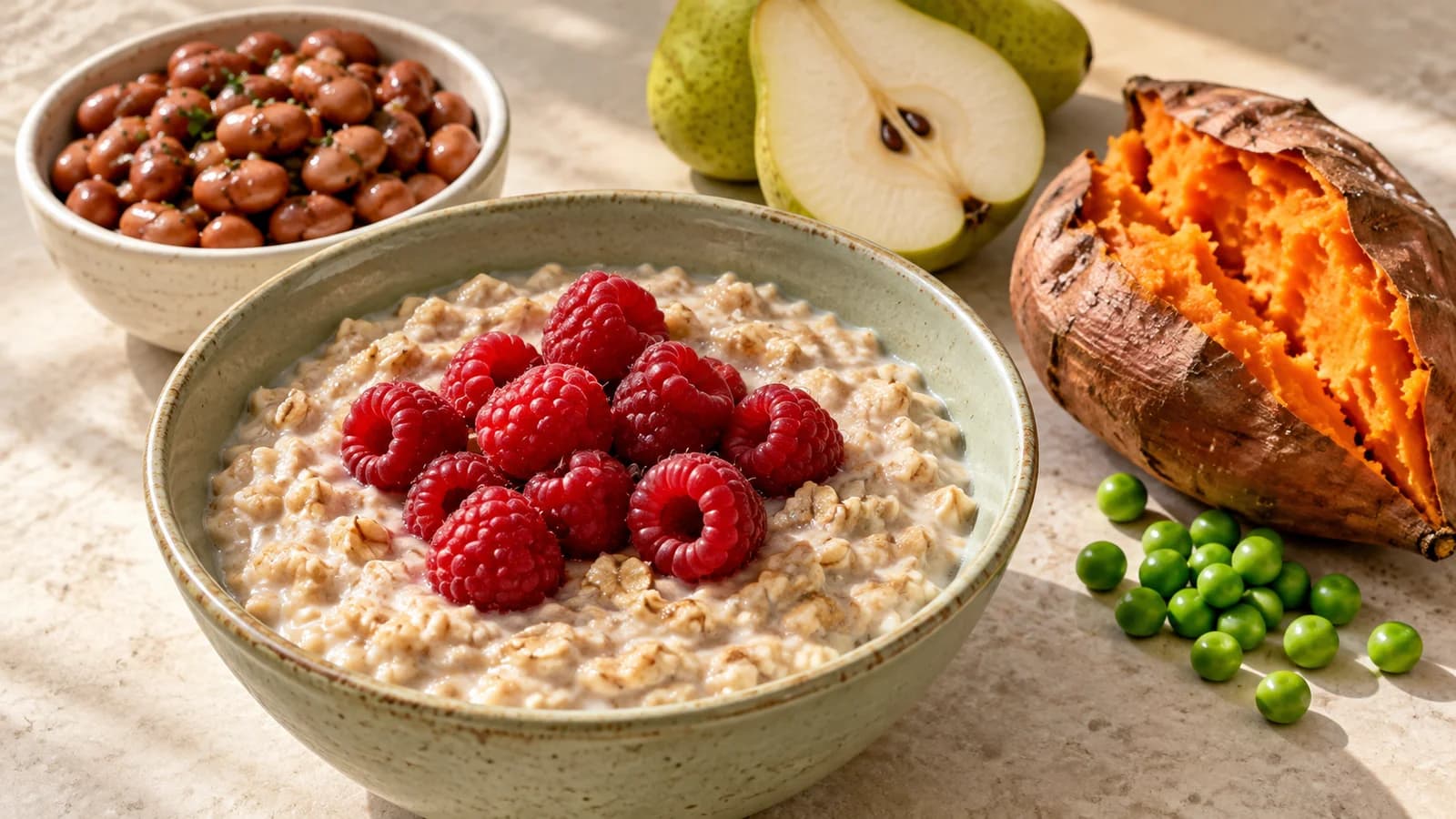
About 30g of fiber can come from ordinary foods spread across the day: oatmeal and berries, a serving of beans, vegetables with dinner, and fruit. You do not have to fit it into one enormous salad or find a special supplement.
The three patterns below show how specific portions add up. They are flexible fiber-building blocks, not complete calorie-controlled meal plans. Add the protein foods, fats, drinks, and other foods you need; the subtotals count only the foods explicitly listed in each table.
Is 30 grams of fiber the right target for everyone?
No. We use 30g as an easy-to-picture example. The FDA's Daily Value for fiber on US nutrition labels is 28g, while individual needs vary. The National Institute of Diabetes and Digestive and Kidney Diseases describes adult recommendations of 22–34g depending on age and sex.12
If your usual intake is much lower, you do not need to jump straight to 30g tomorrow. Increase fiber gradually and drink enough fluids. If you have been advised to follow a low-fiber diet or manage a digestive condition, use your clinician's guidance rather than this example target.2
A portion chart for everyday high-fiber foods
These reference values describe plain foods in the stated form. They are approximate: product labels, fruit size, and preparation can change the amount. A cooked-bean value is not automatically the right number for every canned product.
| Food | Portion to count | Approximate fiber |
|---|---|---|
| Plain oatmeal, cooked | 1 cup | 4.0g |
| Raspberries | 1 cup | 8.0g |
| Pear with skin | 1 medium | 5.5g |
| Apple with skin | 1 medium | 4.8g |
| Prunes | 1/4 cup | 3.1g |
| Green peas, cooked | 1/2 cup | 4.4g |
| Collard greens, cooked | 1 cup | 4.8g |
| Sweet potato, cooked | 1 cup | 6.3g |
| Potato, baked with skin | 1 medium | 3.9g |
| Navy beans, cooked | 1/2 cup | 9.6g |
| Pinto beans, cooked | 1/2 cup | 7.7g |
| Kidney beans, cooked | 1/2 cup | 5.7g |
The fruit, vegetable, and bean figures come from the NIDDK's USDA-based food table; the oatmeal value comes from the Administration for Community Living's fiber resource.34 The half-cup pea value is half the source's one-cup value.
Pattern 1: oatmeal, a bean bowl, and a baked potato
This pattern fits a familiar breakfast-lunch-dinner routine. Serve the oatmeal with milk or yogurt if you like, use the beans in a rice bowl, and add a protein food to the baked potato dinner. Those additions are not included in the fiber subtotal.
| Meal | Fiber foods to include | Fiber subtotal |
|---|---|---|
| Breakfast | 1 cup cooked oatmeal + 1 cup raspberries | 12.0g |
| Lunch | 1/2 cup cooked pinto beans in your bowl | 7.7g |
| Dinner | 1 medium baked potato with skin + 1/2 cup cooked green peas | 8.3g |
| Snack | 1/4 cup prunes | 3.1g |
| Listed foods for the day | 12.0 + 7.7 + 8.3 + 3.1 | 31.1g |
Fresh raspberries are not essential. Frozen berries without added ingredients can be convenient; check the label on the product you buy. If your portion is smaller, count the smaller amount. Half a cup of the reference raspberries contributes about 4g instead of 8g.
Pattern 2: a smaller berry breakfast and beans at lunch
This version uses half a cup of berries at breakfast and a medium pear later. Navy beans can go into a soup or salad, but the table counts the beans themselves—not half a cup of soup that contains some beans.
| Meal | Fiber foods to include | Fiber subtotal |
|---|---|---|
| Breakfast | 1 cup cooked oatmeal + 1/2 cup raspberries | 8.0g |
| Lunch | 1/2 cup cooked navy beans | 9.6g |
| Dinner | 1 medium baked potato with skin + 1/2 cup cooked green peas | 8.3g |
| Snack | 1 medium pear with skin | 5.5g |
| Listed foods for the day | 8.0 + 9.6 + 8.3 + 5.5 | 31.4g |
Use this as a way to plan ingredients, then build meals you enjoy around them. A soup might also contain chicken, vegetables, broth, or oil. A salad might need a dressing and another protein food. Those choices matter to the overall meal even when they do not add much fiber.
Pattern 3: berries, chili ingredients, and sweet potato
Prefer something other than oatmeal? Use raspberries with your usual breakfast, kidney beans in a lunch bowl or chili, and sweet potato with greens at dinner.
| Meal | Fiber foods to include | Fiber subtotal |
|---|---|---|
| Breakfast | 1 cup raspberries alongside your breakfast | 8.0g |
| Lunch | 1/2 cup cooked kidney beans | 5.7g |
| Dinner | 1 cup cooked sweet potato + 1 cup cooked collard greens | 11.1g |
| Snack | 1 medium apple with skin | 4.8g |
| Listed foods for the day | 8.0 + 5.7 + 11.1 + 4.8 | 29.6g |
Here, 29.6g is about 30g. There is little value in chasing an extra fraction of a gram when the food data and portions are already estimates. The pattern is more useful than a perfect-looking total.
A grocery list you can actually use
Choose one pattern before shopping. You do not need every food on this list:
- Breakfast: plain oats and fresh or frozen raspberries.
- Beans: pinto, navy, or kidney beans. For canned beans, use the label and pay attention to whether the serving includes liquid or describes drained beans.
- Vegetables: potatoes, sweet potatoes, frozen peas, or collard greens.
- Fruit: pears, apples, or prunes.
- The rest of your meals: your preferred protein foods, grains, fats, seasonings, and drinks.
For the protein part, our high-protein foods guide shows how different portions compare. The foods that help you reach a protein target and the foods that help you reach a fiber target do not have to be identical.
Make swaps without losing track of the portion
Think in practical increments. In this reference chart, half a cup of kidney beans provides about 5.7g of fiber; half a cup of pinto beans provides about 7.7g. Swapping between them changes the subtotal, but both can be useful ingredients.
Keep three distinctions clear:
- Cooked versus dry: a half cup of dry beans is not a half cup of cooked beans. Use the raw-versus-cooked logging guide when the entry is unclear.
- Ingredient versus finished dish: a cup of sweet potato is different from a cup of casserole containing sweet potato, butter, and other ingredients.
- Plain food versus a specific product: fortified wraps, cereals, and bars can have very different fiber values. Read that product's label rather than borrowing a generic number.
The nutrition-label guide explains where to find dietary fiber and how to adjust for the portion you actually eat.
Fibermaxxing: aim for a routine you tolerate
If a social-media challenge encourages you to add large amounts of fiber at once, start smaller. NIDDK recommends making the increase gradually so your body can adjust, alongside adequate fluids.2
Choose one change you can repeat: berries with breakfast, beans in your lunch, or vegetables with dinner. Keep the rest of the day familiar while you see how that change feels. These examples are meal-planning ideas, not a treatment for persistent digestive symptoms.
Frequently asked questions
Can I get about 30g of fiber without supplements?
Yes. The listed portions in the three examples contribute approximately 30g from foods. A supplement may have a role for some people, but it is not required to reproduce these combinations.
Do I need to eat beans at every meal?
No. Each example includes one half-cup serving of cooked beans and distributes the rest across grains, fruit, or vegetables. Choose foods that fit your preferences and tolerance.
Is this a weight-loss meal plan?
No. These tables total fiber from selected foods. They do not prescribe daily calories or supply a complete nutrition plan. Add enough food for your needs; fiber content alone does not determine whether a day of eating is suitable for you.
Should I aim for exactly 30g every day?
No. Thirty grams is the organizing example for this article, not a universal prescription. Your appropriate intake can differ, and the numbers on labels and in databases are estimates.
How can a food journal help?
A journal can make the foods and portions in your meals easier to review. In Mindful, describe what you ate and check the interpreted ingredients and amounts. Use product labels or the references here for fiber amounts rather than assuming a calorie estimate verifies every nutrient. See how Mindful handles nutrition estimates.
Sources and calculation notes
Checked September 9, 2026. Meal patterns are original combinations of reference food portions, not tested recipes or measured nutrient analyses. Totals are sums of the listed fiber values, rounded to one decimal place. Household measures describe the source portions; weighing and a matching product entry can help when your food differs.
Footnotes
-
US Food and Drug Administration. Daily Value on the Nutrition and Supplement Facts Labels. ↩
-
National Institute of Diabetes and Digestive and Kidney Diseases. Eating, Diet, and Nutrition for Constipation. ↩ ↩2 ↩3
-
National Institute of Diabetes and Digestive and Kidney Diseases. USDA-based fiber food table. Used here for food composition values, not as a treatment plan. ↩
-
Administration for Community Living. Nutrition Needs for Older Adults: Fiber, food-source table. Used for the plain cooked oatmeal value, not to set an individual intake target. ↩