High-Protein Foods for Weight Loss: What 30g Looks Like
Compare six everyday protein foods by calories and the portion that provides about 30g protein, with cooked weights, plant-based options, and meal ideas.
Updated
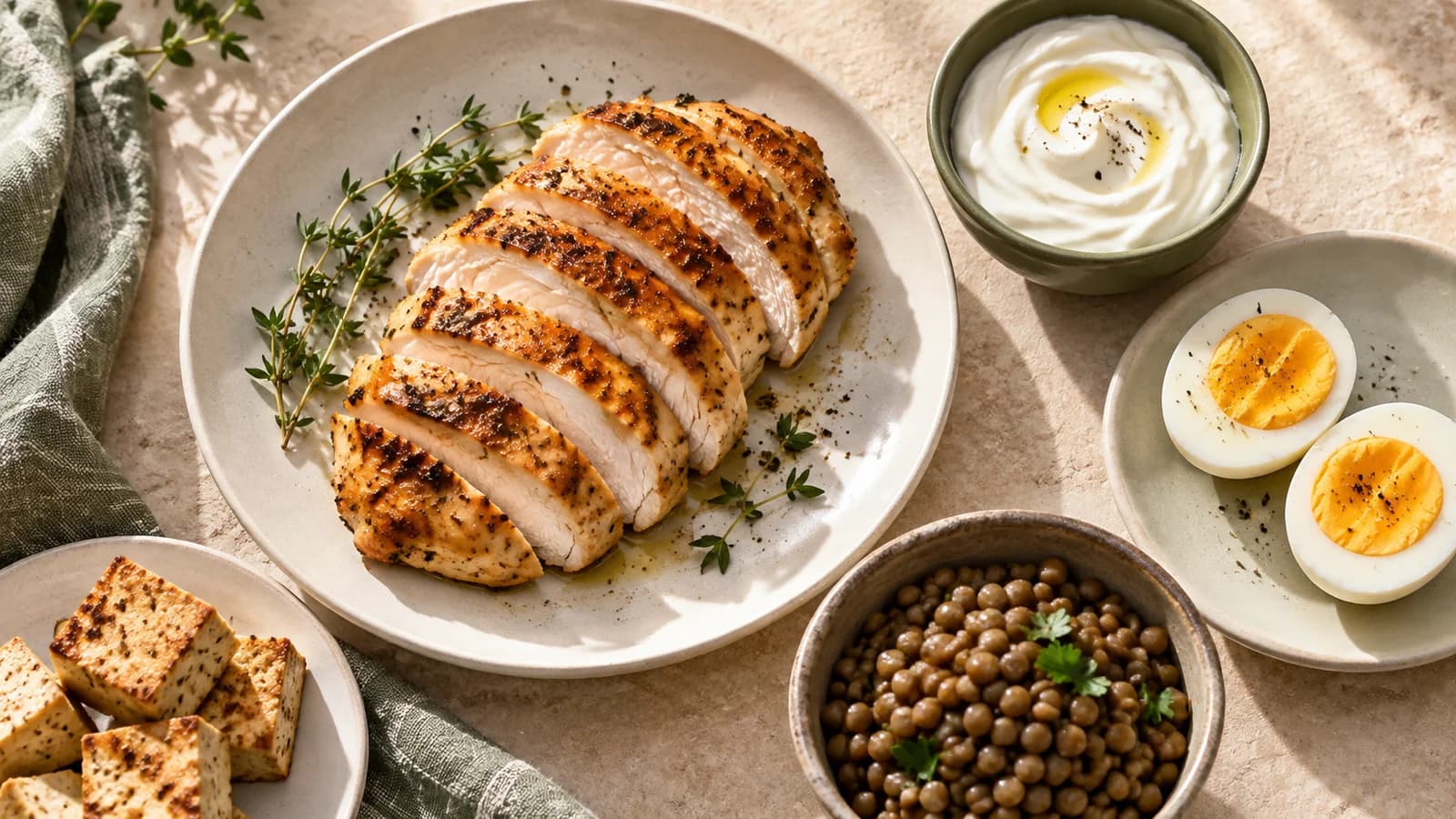
About 30g of protein looks very different depending on the food: roughly 3.4 ounces of cooked chicken breast, 10.4 ounces of plain nonfat Greek yogurt, or 6.1 ounces of the firm tofu in this comparison. Those portions also have different calories, textures, and uses in a meal.
For weight-loss meal planning, protein per calorie can help you compare foods. It is one factor, alongside your total intake, hunger, food preferences, fiber, and other nutrients. A food does not become a poor choice simply because it provides fewer grams of protein per calorie.
This guide compares six specific reference foods, then shows how to combine them into familiar meals. Thirty grams is a comparison amount, not a requirement at every meal.
What does 30g of protein look like?
The following portions are calculated from the nutrition records in the source table below. They are rounded estimates, not weighed serving photographs. Ounces describe food weight; they are not fluid ounces.
Swipe across to read the full table.
| Food and preparation | Portion for about 30g protein | Approximate calories |
|---|---|---|
| Chicken breast, meat only, roasted | 3.4 oz / 97g cooked | 160 |
| Plain nonfat Greek yogurt | 10.4 oz / 295g | 175 |
| Cottage cheese, 2% milkfat | 10.1 oz / 287g | 235 |
| Firm tofu, calcium-set, before cooking | 6.1 oz / 173g | 250 |
| Whole hard-boiled eggs, without shells | 8.4 oz / 239g | 370 |
| Lentils, boiled without salt | 11.7 oz / 332g cooked | 385 |
The entries use different preparation states deliberately: cooked chicken and lentils, hard-boiled eggs, ready-to-eat dairy, and tofu before any oil or sauce is added. Match the state of the food you weigh. Our raw-versus-cooked food guide explains how to do that.
Brand differences matter, particularly for dairy and tofu. A soft tofu, a lower-protein firm tofu, and a dense super-firm tofu will not all match this reference. Use your product's label when you have it.
How the comparison was calculated
For each food:
Food weight for 30g protein = reference serving weight × 30 ÷ protein in that reference serving.
For the chicken entry, 100g supplies about 31g protein and 165 calories. That gives 100 × 30 ÷ 31 = about 97g of chicken and 165 × 30 ÷ 31 = about 160 calories.
Here are the inputs so you can check the math or substitute your own food label. These are USDA Standard Release records viewed through MyFoodData, not newly measured samples.123456
Swipe across to read the full table.
| Reference food | Source portion | Protein | Calories |
|---|---|---|---|
| Roasted chicken breast, meat only | 100g | 31.0g | 165 |
| Plain nonfat Greek yogurt | 170g | 17.3g | 100 |
| Cottage cheese, 2% milkfat | 113g | 11.8g | 92 |
| Firm tofu, prepared with calcium sulfate | 126g | 21.8g | 181 |
| Whole hard-boiled eggs | 136g | 17.1g | 211 |
| Lentils, boiled without salt | 198g | 17.9g | 230 |
Weights in the first table are rounded to the nearest gram; calories are rounded to the nearest five. Results are calculated from the source portions before rounding. Database values describe reference foods, so more decimal places would not make your own meal equally precise.
Which foods provide the most protein per calorie?
Within these six examples, chicken and nonfat Greek yogurt provide the most protein per calorie. This is a comparison of the listed foods, not a ranking of every protein food on the market.
Swipe across to read the full table.
| Food | Approximate protein per 100 calories |
|---|---|
| Roasted chicken breast | 18.8g |
| Plain nonfat Greek yogurt | 17.3g |
| Cottage cheese, 2% | 12.8g |
| Firm tofu in this comparison | 12.0g |
| Hard-boiled whole eggs | 8.1g |
| Cooked lentils | 7.8g |
A protein-density table answers one narrow question: how much protein comes with a given amount of energy? It does not measure the food's overall nutritional value. For example, the cooked-lentil reference also contains about 15.6g fiber per cup. Lentils can contribute starch, protein, and fiber within the same meal.6
If you are also planning fiber, see what about 30g of fiber looks like across a day.
How to use these foods in actual meals
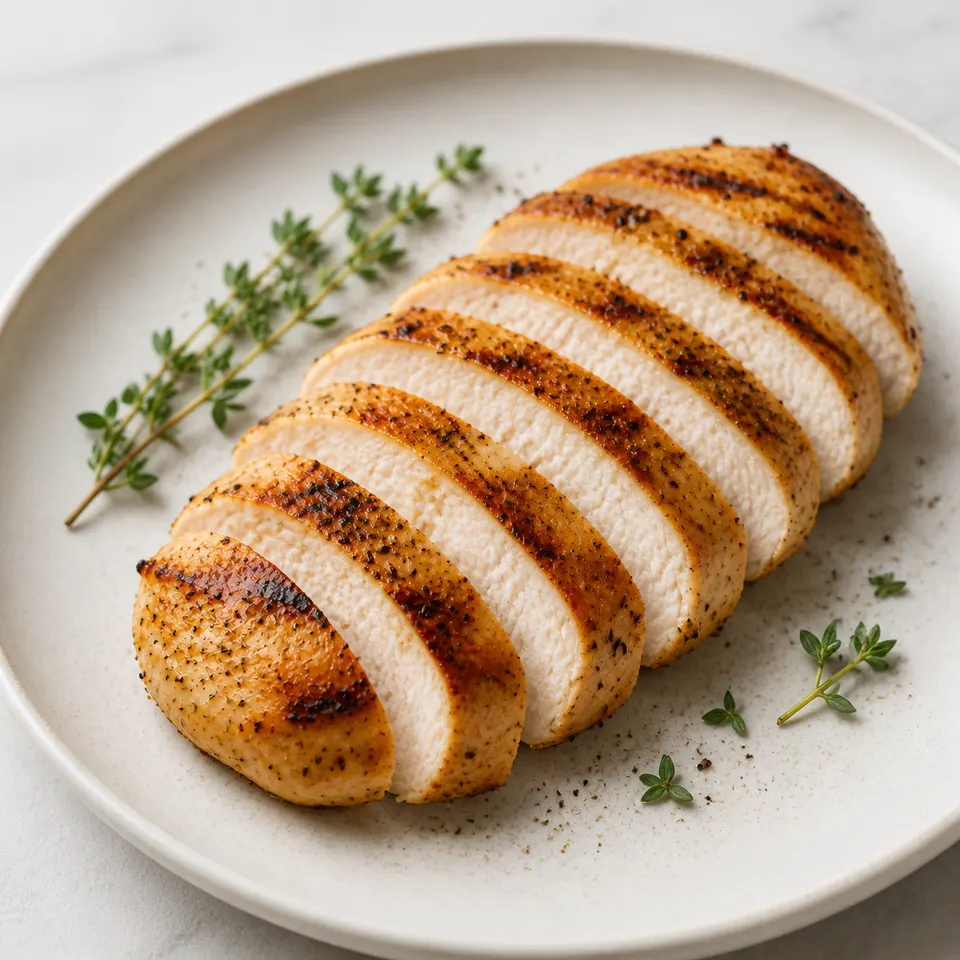
Chicken: a small protein anchor for a larger meal
The approximately 97g cooked portion is just the chicken, not the whole dinner. Add the starch, vegetables, and sauce you enjoy. A rice bowl, sandwich, pasta dish, or plate with potatoes can all use the same protein anchor.
If you weigh the meat raw, select a raw entry instead. Do not reuse the cooked portion number for the raw product and expect the same calculation.
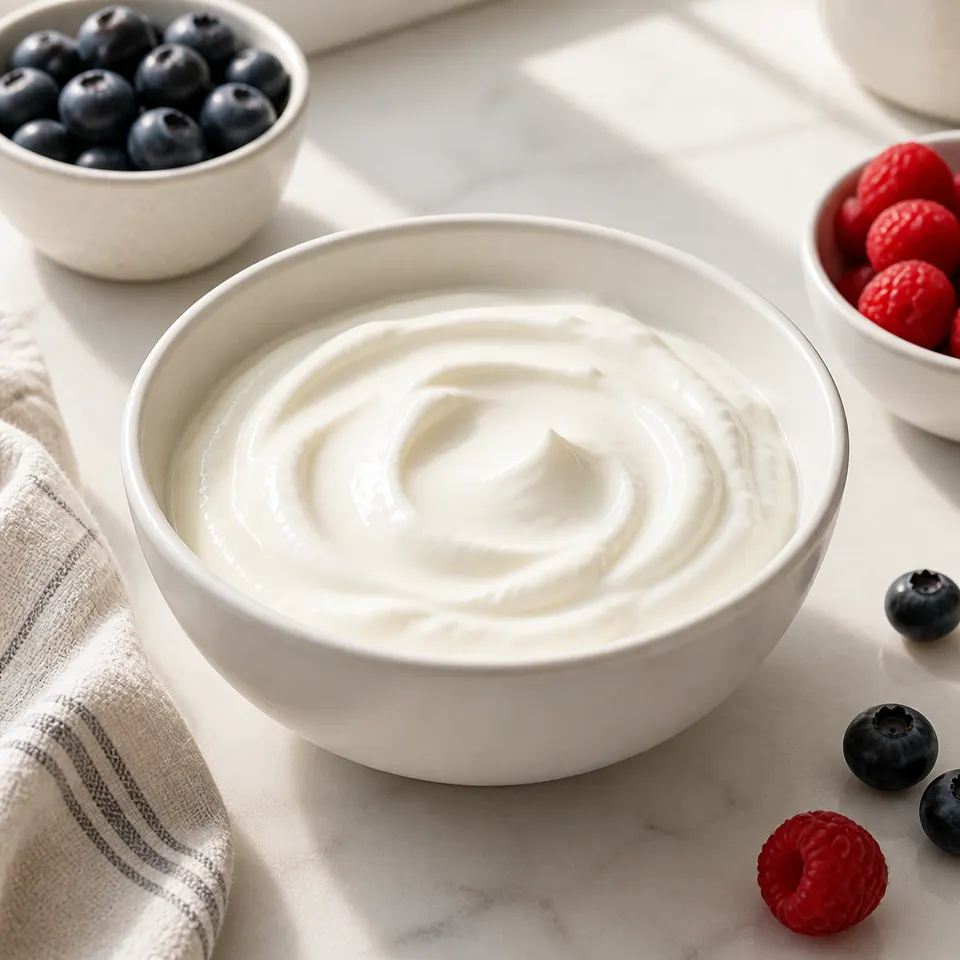
Greek yogurt: check the size of the container
A small individual yogurt does not necessarily supply 30g protein. In the reference used here, a 170g container supplies 17.3g; reaching 30g from that yogurt alone takes about 295g.
You do not have to eat that amount. Use the portion you enjoy and let other breakfast foods contribute protein. Fruit, oats, or nuts can add texture and other nutrients, with their calories counted separately.
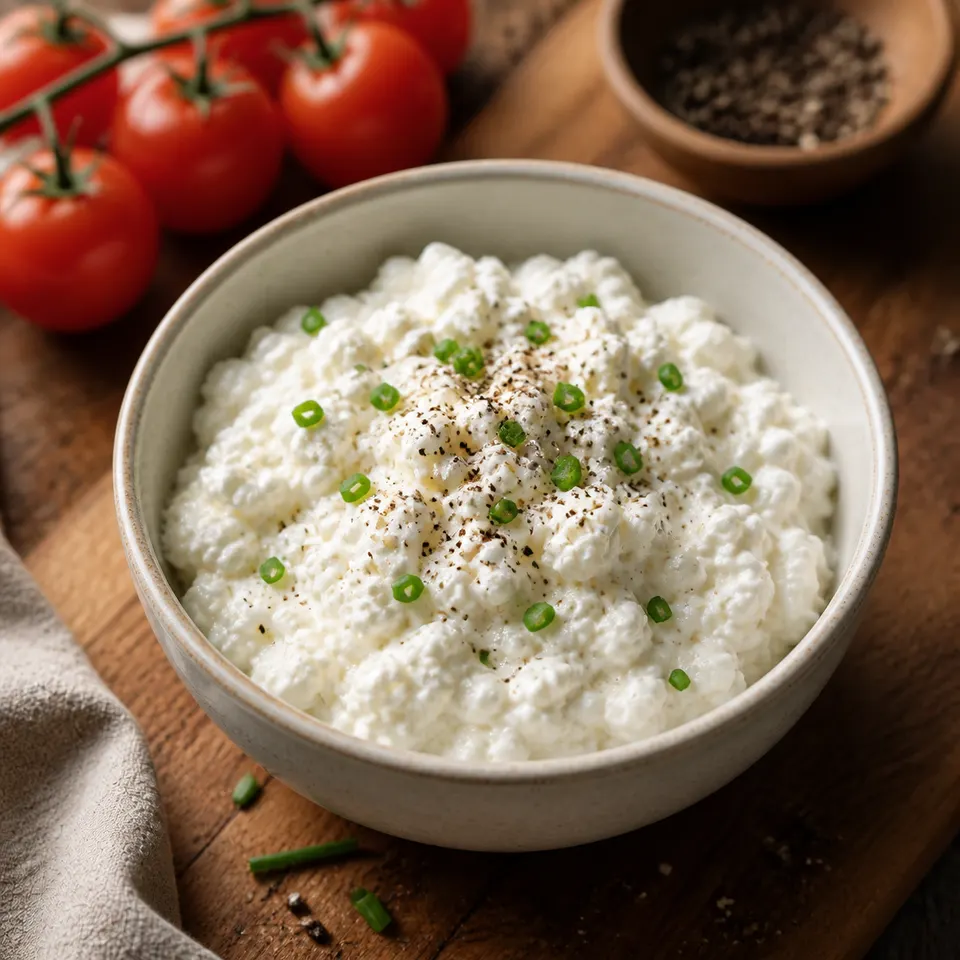
Cottage cheese: a convenient ingredient with variable labels
The 2% reference requires about 287g to supply 30g protein. Some brands provide more protein per serving than this generic entry. Check the tub before translating a household measure into a protein total.
Try a portion with toast and tomatoes, fruit, or alongside another food. Sodium also differs by brand, so compare that part of the label when it matters to you.
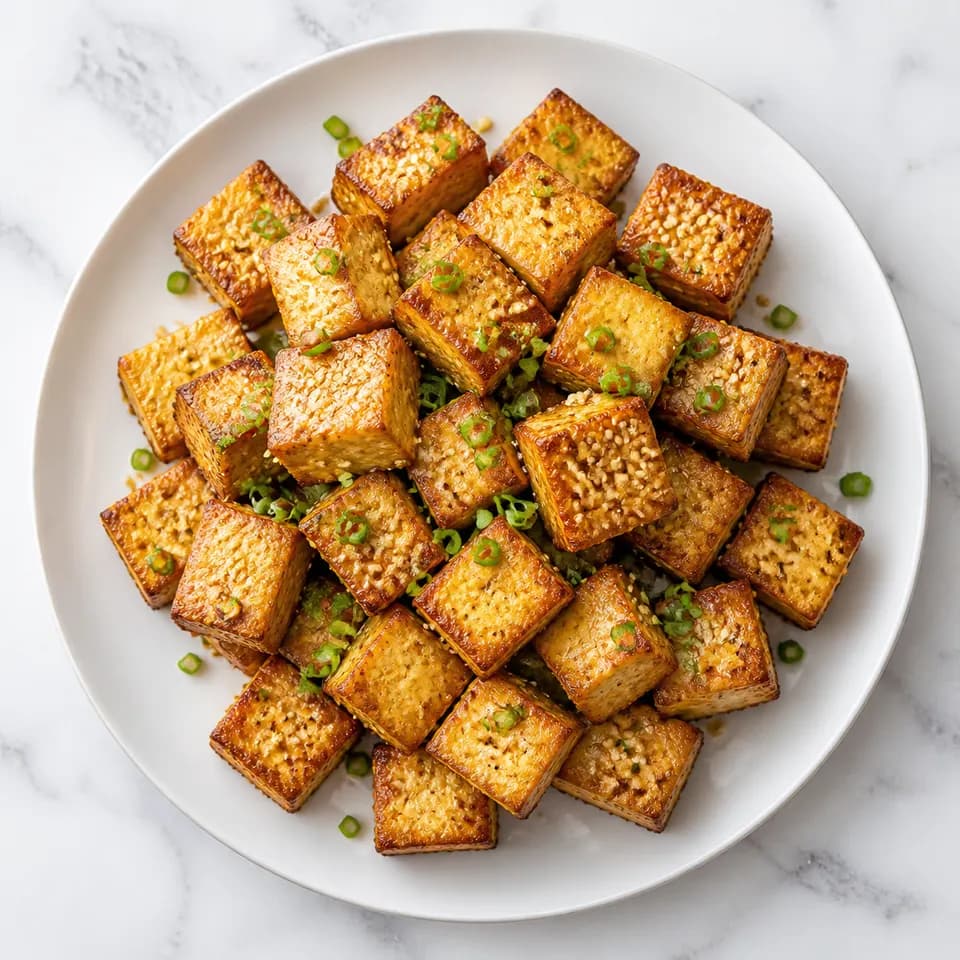
Tofu: use the label on your particular block
Our firm, calcium-set reference reaches about 30g protein at 173g before cooking. That does not establish a universal “half a block” rule. Packages and water content vary.
Weigh the portion in the state described by the label, then include cooking oil and sauce. A tofu-and-lentil bowl is another way to combine protein sources without requiring all the protein to come from one ingredient.
Whole eggs: combine foods instead of chasing a number
The comparison's 239g is the edible hard-boiled egg weight without shells. It is close to five large eggs if each edible egg weighs about 50g. That is a scale comparison, not a recommendation to eat five eggs at breakfast.
A smaller portion of eggs can be combined with yogurt or another protein food. For example, 100g hard-boiled eggs plus 170g of the reference yogurt supplies about 30g protein in total. Using the source values, it contributes roughly 255 calories before other breakfast ingredients.
Lentils: count them as more than a protein substitute
Reaching 30g protein from lentils alone takes about 1.7 of the reference 198g cups. Many people will prefer a smaller amount as part of a mixed meal.
For example, 126g of the reference tofu plus 99g cooked lentils supplies about 30.8g protein and 296 calories before vegetables, dressing, or oil. That combination uses the tofu's protein density while including some lentils. It is a calculated assembly idea, not a tested recipe.
Make your own 30g comparison from a label
Suppose your yogurt label lists 20g protein and 120 calories per 170g serving. To compare it at 30g protein, multiply by 30 ÷ 20 = 1.5:
- Food weight: 170 × 1.5 = 255g.
- Calories: 120 × 1.5 = 180.
That is an illustrative label, not another claim about the generic yogurt above. The method works with your own label, including a different tofu, cottage cheese, canned fish, or protein powder.
For details on serving sizes, see how to read a nutrition label.
Do you need 30g of protein at every meal?
No. A fixed amount is useful for comparing foods, but it cannot set everyone's needs. Body size, activity, total diet, age, and health circumstances can change the appropriate target. Our protein calculator explains its assumptions and offers an estimate rather than a prescription.
Once you have an appropriate daily target, choose a meal pattern that is practical. There is no need to force every snack or every ingredient to supply the same amount of protein.
Frequently asked questions
Does 30g of chicken mean 30g of protein?
No. Food weight includes water, fat, and other components. In the roasted-chicken reference here, 100g of food contains about 31g of protein. A 30g piece of that chicken supplies about 9g protein.
Is the lowest-calorie protein always the best choice?
No. Protein density is useful when comparing portions, but taste, variety, cost, fiber, other nutrients, and how the food fits the rest of your meal also matter.
Can plant foods provide about 30g of protein?
Yes. The specific firm tofu in this comparison provides about 30g in a 173g portion. You can also combine plant foods, as in the calculated tofu-and-lentil example. Check actual labels because protein content varies.
Are the photographs exact 30g protein portions?
No. Food photographs are illustrative. The tables show calculations from the named reference records; they are not measurements of the pictured food.
Can I use these numbers for restaurant chicken or flavored yogurt?
Only as a rough starting point when a better match is unavailable. Marinades, coatings, added ingredients, and different formulations can change the values. A matching restaurant listing or product label is preferable.
Where Mindful fits
When logging a meal, include the food type, portion, and preparation: “3.5 oz cooked skinless chicken breast” is clearer than “some chicken.” In Mindful, review the estimate and correct the portion or ingredients if they do not describe your food.
Use this guide to understand portions, then use your actual meal details. Learn how to check a calorie and macro estimate.
Sources
Nutrition records checked September 9, 2026. Values were inspected through MyFoodData's display of USDA Standard Release data. The calculations above use those displayed values and explicitly stated food preparations. Food images are illustrative.
Footnotes
-
USDA record 171477, chicken breast, meat only, roasted. Nutrition record. ↩
-
USDA record 170894, plain nonfat Greek yogurt. Nutrition record. ↩
-
USDA record 172182, cottage cheese, lowfat, 2% milkfat. Nutrition record. ↩
-
USDA record 172475, raw firm tofu, prepared with calcium sulfate. Nutrition record. ↩
-
USDA record 173424, whole hard-boiled egg. Nutrition record. ↩
-
USDA record 172421, lentils, cooked, boiled, without salt. Nutrition record. ↩ ↩2