Best Calorie Tracking Apps for Homemade Meals and Leftovers
Compare recipe and meal-logging capabilities for homemade dishes, batch cooking, variable portions, and leftovers.
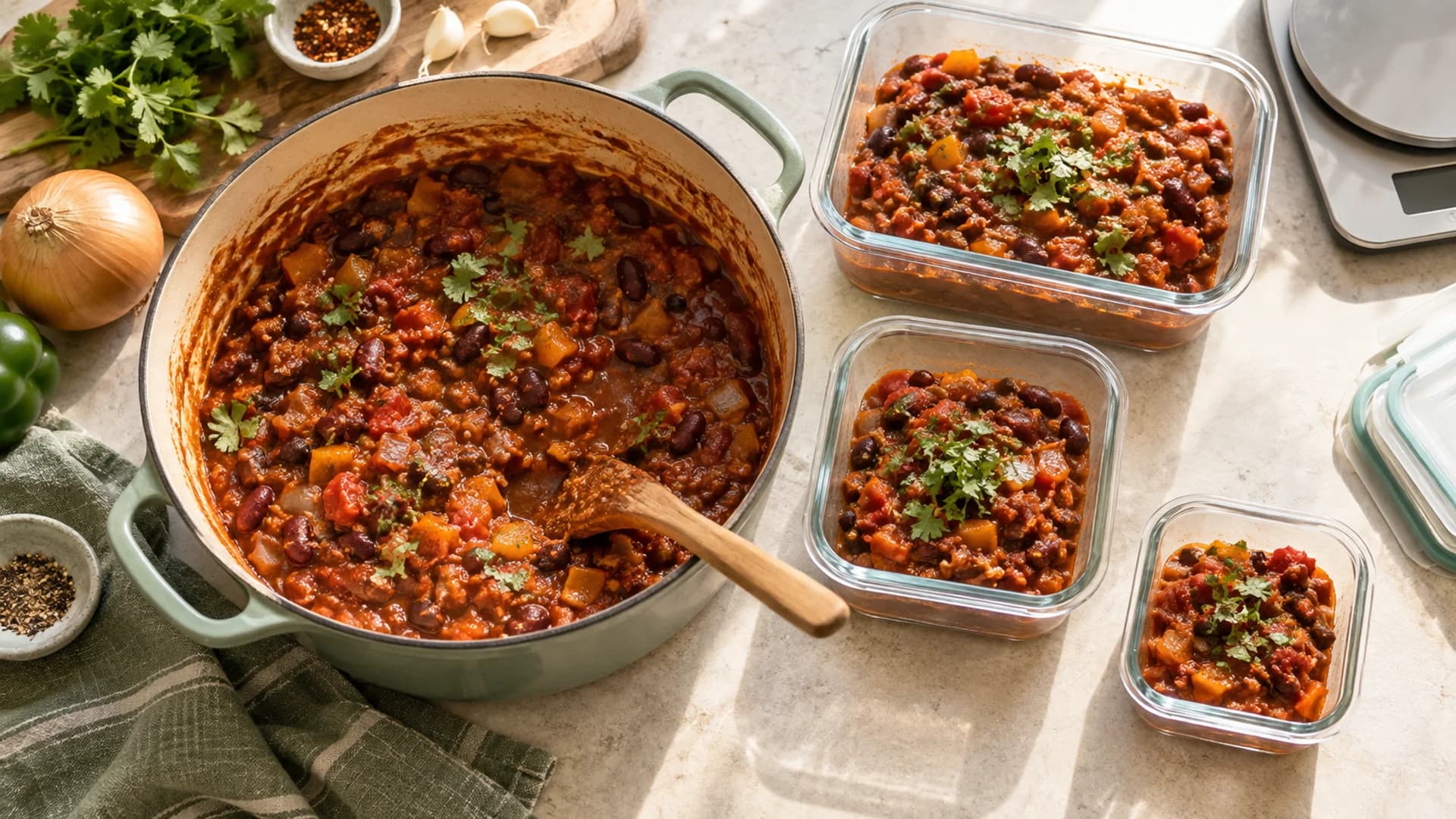
Quick answer. For a homemade batch whose ingredients you know, Cronometer and MacroFactor offer particularly useful cooked-weight recipe tools. MyFitnessPal offers established ingredient-based recipes, web imports, and saved meals. Mindful is useful when you want to describe a home-cooked serving and review an estimate, especially when exact ingredient weights are unavailable. Pick the method according to whether you need a measured batch calculation or a reasonable journal entry.
This comparison is based on product documentation checked September 23, 2026, not a kitchen test of the apps. Mindful publishes this guide and appears in it. We do not claim that a photo or AI description can identify the full ingredient list of a homemade dish.
Why homemade meals are different
A packaged food has a label. A homemade lasagna has ingredients, a finished yield, and portions that may not be equal. Cooking can change the weight as water evaporates or is absorbed, even when the recipe's underlying energy does not change in the same proportion. If you weigh a food after cooking, use a database entry for the cooked food or a recipe whose final cooked weight you have entered. Our raw-versus-cooked guide explains this in detail.
For a reproducible batch calculation, record the ingredient amounts, total recipe nutrition, finished yield, and the weight or fraction you ate. The recipe nutrition calculator can help with that calculation before you choose where to save the result.
| App or tool | Best documented route for a homemade batch | Portion option to examine |
|---|---|---|
| Cronometer | Build a custom recipe from ingredients | Enter the finished cooked weight and log a portion by weight |
| MacroFactor | Build or import a recipe, then review ingredients | Enter the final cooked weight or a number of equal servings |
| MyFitnessPal | Enter ingredients or import a recipe; keep repeat meals separately | Set recipe servings and adjust ingredient matches |
| Mindful | Describe a serving and review its estimate | Correct the described portion and ingredients; use a separate batch calculation when needed |
These are different levels of detail, not interchangeable measures of accuracy.
Cronometer: strongest fit for a weighed cooked batch
Cronometer's custom recipe workflow is designed for ingredients that become one dish. After cooking, you can enter the finished recipe weight, making it easier to log an uneven portion by weight. It also distinguishes a custom meal, a group of items eaten together, from a recipe, a dish made from ingredients. Custom foods and recipes Cooked recipe weight
That distinction helps with leftovers. If Monday's soup serving is 12 ounces and Wednesday's is 9 ounces, a final cooked weight can represent both without pretending the bowls were equal. You still need to enter the ingredients correctly and weigh the finished batch if that level of detail matters.
MacroFactor: flexible recipe portions
MacroFactor lets you create a recipe from scratch or import one, then review the ingredient list. Its recipe guide recommends entering the final weight after cooking when you want to log portions by mass; you can use a serving count for equal portions instead. MacroFactor custom recipes MacroFactor also explains why the raw ingredient weights are not automatically the right denominator for a cooked dish that lost water. Multiple-serving recipe guide
This is a good fit for someone who batch cooks and also wants MacroFactor's broader nutrition and target-setting workflow. The recipe is only as sound as the ingredient matches and amounts you enter.
MyFitnessPal: recipes and reusable meals
MyFitnessPal's recipe importer accepts a link or a manually entered ingredient list and asks you to check the food matches and number of servings. Recipe importer on iPhone Its saved meals are useful for a recurring plate made of separate items, such as eggs, toast, and fruit. A recipe is more appropriate for the eggs baked into a casserole. Saved meals explained
The practical check is whether the recipe's “serving” matches what you ate. If you divide a dish into six equal containers, six servings is straightforward. If everyone takes a different amount, a weighted portion method may be easier to defend.
Mindful: a reviewable estimate when the recipe is unknown
At a friend's dinner or a local restaurant, you may know what the dish looked and tasted like but not its recipe. Mindful lets you write a useful description, see what foods and portions it inferred, and correct the entry. That is a different job from accounting for every ingredient in a batch you cooked yourself. How Mindful estimates meals
For your own recipe, calculate from actual ingredients when you can. For an unknown serving, describe the portion, sauce, and preparation as clearly as possible, then keep the result as an estimate. Do not treat a photograph of a casserole as a measurement of the oil or cheese inside it.
A leftover workflow that works in any app
- Record the ingredients in the form and amount you used.
- After cooking, record the finished yield if you plan to portion by weight.
- Use the same saved recipe for each leftover serving, changing the amount you ate.
- Add toppings or sides separately if they changed from day to day.
- Recheck the recipe when you change its ingredients next time.
If measuring a batch is more effort than you need, use a clearly described serving and accept more uncertainty. The best method is the one that matches the detail you actually have, rather than an app's most impressive feature list.
Next, see how to log by photo, text, or barcode or compare the broader set of calorie tracking apps.