Loading Results...
Find my type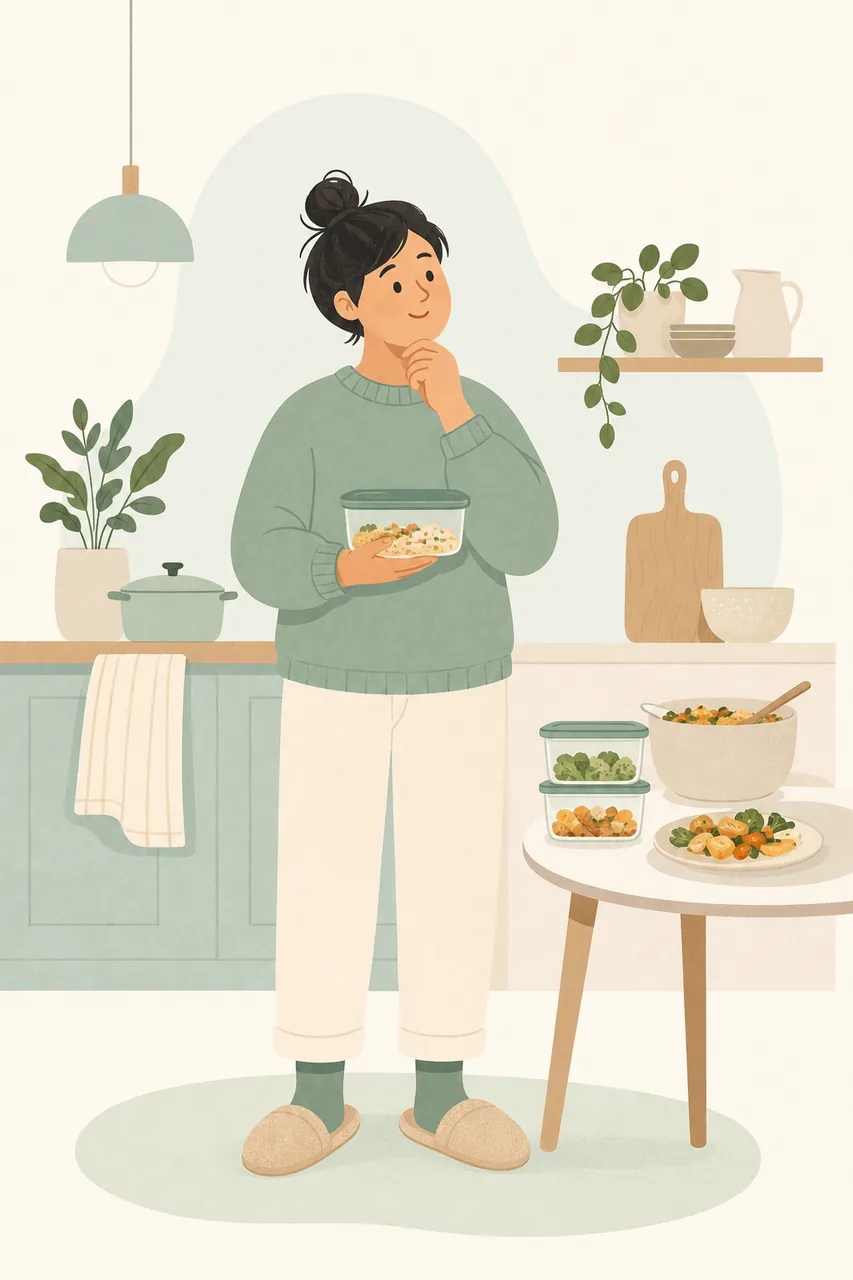
Explore this eating pattern
The Waste-Not Eater
The leftovers deserve a plan, too.
ResourcefulFood consciousFinishing instinct
A snapshot of eating patterns, with room to change.
Food can represent money, effort, generosity, or memories of not having enough. Leaving it behind may feel uncomfortable even when you do not want more. This playbook respects that concern while exploring practical ways to care for food and your own comfort together.
A strength to keep
You value resources and the work behind a meal. That care can show up in planning, storing, and choosing what you need.
One small step
Before one meal, decide what you could save for later if you do not want it all. Follow suitable food-safety guidance for storage.
Your free 10-page playbook
Your type explained.
Your next seven days planned.
Get your free playbook for The Waste-Not Eater: everyday examples, small experiments, and a printable seven-day worksheet.
- Recognize the situations that bring your pattern out.
- Try a seven-day plan made for this type.
- Keep a worksheet and a kinder plan for difficult days.
A look inside your actual playbook. Written for this type, with space to make it your own.
Overview
If this sounds like you
If you are The Waste-Not Eater, stopping can feel harder when food is still there. Leftovers call your name. Buffets feel like a small personal finance challenge. A good deal can make extra food feel responsible, even when your body is quietly asking to be done.
This pattern often comes from a perfectly reasonable place. Food costs money. Someone cooked it. Throwing it away can feel careless. So you finish the last few bites, take the extra portion, or keep eating because leaving it feels wrong.
At your best, you are resourceful and appreciative. You notice value. You dislike waste. You may be the person who saves leftovers, stretches groceries, and respects the effort behind food.
The tricky part is that your body can become the storage container. When fullness says stop but waste guilt says finish, the guilt often wins because it feels morally cleaner in the moment.
For The Waste-Not Eater, progress is learning that respecting food includes respecting the body that receives it.
What drives it
The mechanism underneath
Food value, scarcity logic, and guilt around waste can override hunger and fullness. The food feels like it needs to be saved, finished, or justified.
Why this happens
Waste guilt makes leaving food behind feel irresponsible.
Deals, buffets, leftovers, and abundant settings make more food feel like better value.
Finishing what is there can feel easier than deciding whether your body is actually done.
Common signs
You eat extra because the food is already there, already paid for, or too good to waste.
Leftovers, buffets, and family-style meals are harder to navigate than plated portions.
You stop based on what remains on the plate more than what your body is saying.
Strengths & challenges
What helps you, and where it can get in your way
What works in your favor
You are practical, resourceful, and probably thoughtful about money and effort. Those are good instincts when your body still gets a vote.
Where it can get in your way
Finishing food to avoid waste can move the waste from the plate to your discomfort. The intention is responsible; the outcome can be harder on you.
First steps
What to do with this result this week
The progress trap
The trap is treating your body like the responsible place to put extra food. Saving food is useful. Forcing yourself to finish it is not the only way to honor it.
1
Practice leaving two bites behind when you are comfortably done, just to prove the world continues.
2
Store leftovers before you start eating if abundance tends to pull you past fullness.
3
Use value language carefully: a deal is only a deal if it still supports the life you want.
How Mindful helps
Start building a calmer food system
1
Helps you notice when the driver is hunger, value, guilt, or abundance.
2
Makes fullness patterns visible so finishing food is not the only signal that a meal is complete.
3
Supports practical planning around leftovers without turning your body into the backup container.
A quick note
This quiz is for self-reflection, not diagnosis or medical advice. If food, tracking, weight, or eating patterns feel distressing or unsafe, consider working with a registered dietitian, clinician, or mental health professional.