Loading Results...
Find my type
Explore this eating pattern
The Reward Eater
A little celebration belongs on the calendar.
Milestone mindedTreat ritualsCelebration
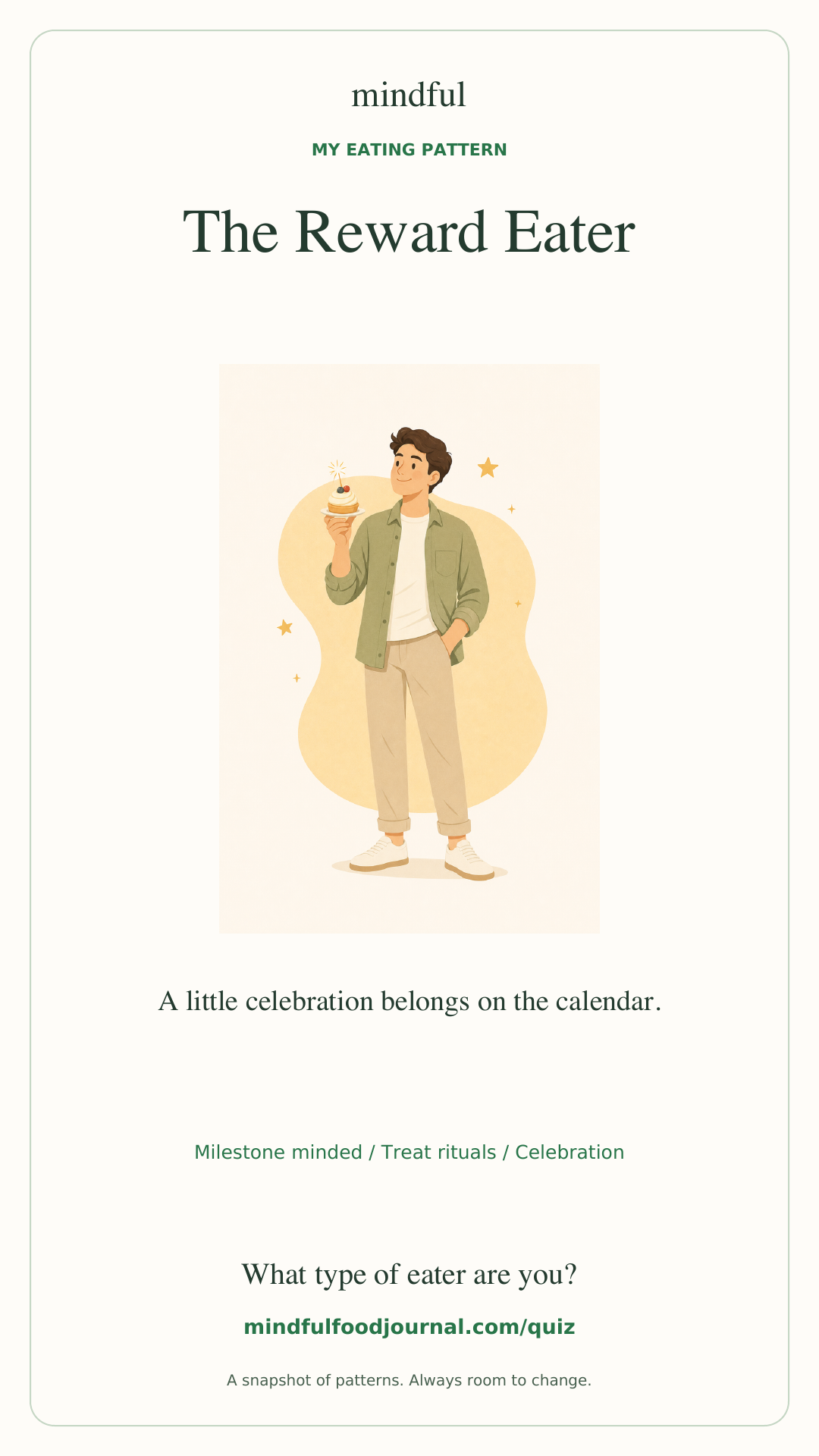
A snapshot of eating patterns, with room to change.
A favourite food or drink can mark finishing something difficult, celebrating a win, or finally getting a break. This playbook helps you enjoy those rituals while noticing when food is carrying the whole job of recognition, pleasure, or rest.
A strength to keep
You make room for enjoyment and acknowledge effort. Those are useful instincts to keep, even as your rituals evolve.
One small step
Enjoy a treat because you want it, and notice whether you also want recognition, rest, or a clearer end to the task.
Your free 10-page playbook
Your type explained.
Your next seven days planned.
Get your free playbook for The Reward Eater: everyday examples, small experiments, and a printable seven-day worksheet.
- Recognize the situations that bring your pattern out.
- Try a seven-day plan made for this type.
- Keep a worksheet and a kinder plan for difficult days.
A look inside your actual playbook. Written for this type, with space to make it your own.
Overview
If this sounds like you
If you are The Reward Eater, food may show up as a small prize for being a person who keeps going. Finished the project? Special coffee. Hard meeting? Takeout. Made it through Wednesday with your dignity mostly intact? Honestly, that can start to feel reward-worthy too.
This pattern can be easy to miss because it often feels positive. You are not necessarily eating because you feel out of control. You are eating because you did something, endured something, completed something, or simply want the day to acknowledge your effort.
At your best, you know how to enjoy life. You are not trying to turn food into a sterile set of rules, and that is a good thing. Food should be allowed to feel celebratory sometimes.
The problem is that reward logic is generous. Very generous. It can find a reason every day, sometimes several times a day. Once food becomes the default way to mark effort, the line between celebration and habit gets blurry.
For The Reward Eater, progress does not mean becoming less joyful. It means making rewards feel intentional again, so the things you choose actually feel worth it.
What drives it
The mechanism underneath
Food becomes the reward for effort, achievement, stress endured, or simply making it to another socially acceptable treat checkpoint.
Why this happens
Food is an easy reward that does not require planning, scheduling, or other people.
Positive emotion creates less friction than guilt or stress, so the pattern can go unquestioned.
Modern life creates constant mini-achievements that can each become a reason to treat yourself.
Common signs
A hard meeting, completed project, or long day often turns into a food cue.
Treats happen often enough that they stop feeling memorable.
You rarely feel guilty in the moment, which makes the pattern harder to examine.
Strengths & challenges
What helps you, and where it can get in your way
What works in your favor
You know how to enjoy food and mark moments. That joy is worth protecting, not flattening into rules.
Where it can get in your way
Reward logic is almost impossible to disprove. There is always something you handled, finished, endured, or technically participated in.
First steps
What to do with this result this week
The progress trap
The trap is treating every earned moment as equal. If every effort gets the same edible medal, the reward system gets noisy and the rewards lose their meaning.
1
Decide which rewards are actually worth keeping and which are just automatic.
2
Create a few non-food rewards that still feel like rewards, not homework.
3
Log treat moments with the reason attached so you can see what you are rewarding most often.
How Mindful helps
Start building a calmer food system
1
Shows how often rewards are happening so celebration stays special.
2
Helps separate genuine enjoyment from automatic 'I deserve this' loops.
3
Gives you enough nutrition visibility to choose treats on purpose, not by default.
A quick note
This quiz is for self-reflection, not diagnosis or medical advice. If food, tracking, weight, or eating patterns feel distressing or unsafe, consider working with a registered dietitian, clinician, or mental health professional.