Hunger vs. Cravings: How to Tell the Difference (and Why It Matters)
Hunger and cravings can feel similar, but they come from different systems with different triggers. A research-backed guide to telling them apart and responding to each one.
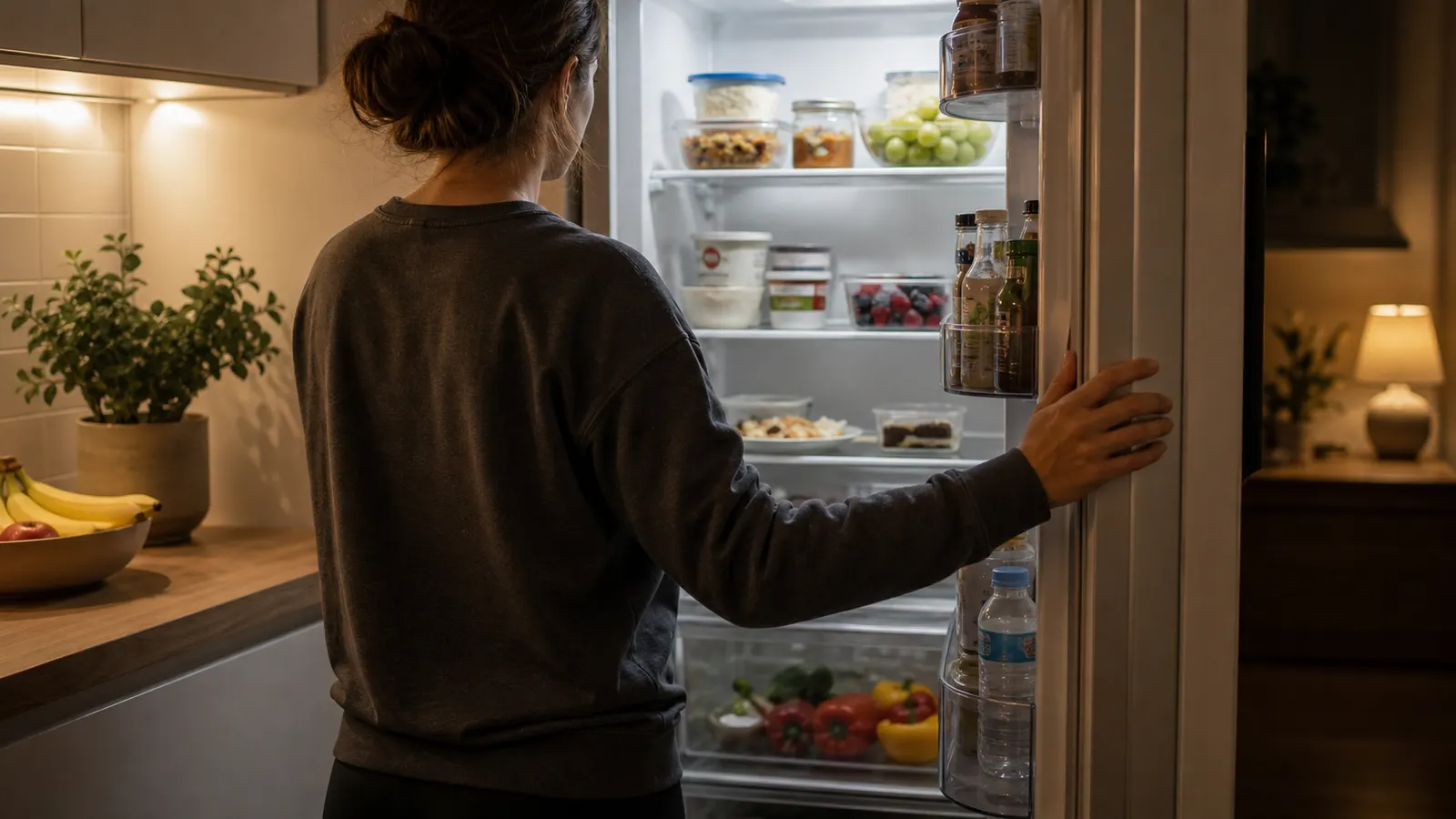
TL;DR. Hunger and cravings can feel similar in the moment, but they are not the same signal. Hunger is a broader physiological cue tied to energy needs and appetite hormones. It usually builds gradually, feels less specific, and can be satisfied by many foods. Cravings are more specific reward-driven urges. They often appear suddenly, target a particular food, and may persist even after eating something else. Both are normal. Neither is a moral problem. The difference matters because they respond to different tools: hunger usually needs food; cravings often respond better to time, context change, planned inclusion, or non-food distraction. The popular "would you eat an apple?" test is useful, but it is only one signal.
There is a familiar 3pm moment: lunch was a couple of hours ago, work is dragging, and suddenly you want a cookie. Your stomach is not growling. You are not lightheaded. You just want that specific thing.
The usual advice is to ask, "Would I eat an apple?" If yes, hunger. If no, craving. That test is directionally useful because it checks whether the urge is general or specific. But real life is messier. You can be hungry and craving something at the same time. You can crave food because you are stressed, tired, underfed, bored, or because the same cue has been reinforced for years.
This article breaks down the difference between hunger and cravings, the brain systems behind them, six practical signals that help tell them apart, and what to do once you know which one is driving the urge.
A note before reading. If you have a current or past eating disorder, are recovering from restrictive eating, or notice that hunger "tests" make you more rigid around food, do not use this article as a protocol. Work with a registered dietitian or therapist. The goal here is awareness, not permission to ignore hunger.
Two systems, one food urge
Eating behavior is regulated by overlapping systems. The cleanest distinction is between homeostatic hunger and hedonic eating.
Homeostatic hunger
Homeostatic hunger is the energy-balance system. It helps your body notice when energy intake is needed and when enough food has arrived.
The hypothalamus plays a central role, including AgRP/NPY neurons that promote eating and POMC/CART neurons that help signal satiety1. These brain circuits respond to signals from the body, including:
- Ghrelin, which tends to rise before meals and increases the drive to eat
- Leptin, which reflects longer-term energy availability from fat tissue
- Insulin, which rises after eating and helps signal short-term energy availability
When you have gone several hours without eating, hunger often becomes more noticeable. It may feel like stomach emptiness, low energy, irritability, difficulty concentrating, or a general "food sounds good" feeling.
The important word is general. Hunger usually does not demand one exact food. A normal meal, leftovers, yogurt, a sandwich, fruit with protein, or whatever sounds reasonable can all work.
Hedonic eating
Hedonic eating is the reward side of eating. It is less about energy need and more about pleasure, memory, cues, and motivation.
Food reward involves brain areas such as the nucleus accumbens, ventral tegmental area, orbitofrontal cortex, lateral hypothalamus, and ventral pallidum2. These systems help explain why a person can feel full after dinner and still strongly want dessert.
Cravings are usually more specific than hunger. They are tied to:
- A visible or smelled food cue
- A habit, like wanting something sweet after dinner
- A time of day, like the afternoon snack window
- An emotional state, like stress or boredom
- A learned association, like popcorn with a movie
One useful neuroscience distinction is between liking and wanting2. Liking is the pleasure of eating the food. Wanting is the motivation to seek it. Those can split apart. You can strongly want a food and then not enjoy it as much as expected once you are eating it.
They overlap
The systems interact. Ghrelin does not just make you hungry; it can also make rewarding foods more appealing. Low leptin after weight loss may make food feel more rewarding. Stress can increase both appetite and cravings3.
That is why the question is not always "hunger or craving?" Sometimes the honest answer is "both." The skill is identifying which signal is strongest, then responding in a way that fits.
What cravings are
Research generally defines a food craving as an intense desire for a specific food, distinct from general hunger by its specificity and strength45.
A few patterns show up repeatedly:
Cravings are usually specific. People tend to crave chocolate, chips, pizza, cookies, ice cream, fries, or other highly palatable foods more often than plain protein or vegetables. The exact food varies by culture and personal history, but cravings usually point at something specific5.
Cravings are often cue-driven. A smell, place, time, mood, or routine can trigger them. If you usually eat something sweet after dinner, the end of dinner can become the cue.
Cravings can increase with restriction. Avoiding a specific food can temporarily make it more mentally prominent. That does not mean every craving needs to be acted on, but it does explain why rigid "never again" rules often backfire5.
Cravings can coexist with hunger. Being hungry can make cravings louder, but the two are still separable. A craving is about a specific target; hunger is about food more generally.
Six ways to tell the difference
No single test is perfect. Use these as signals, not rules.
1. Specificity
Hunger is flexible. Cravings are specific.
If several normal foods sound acceptable, hunger is probably involved. If only one food sounds right, or if you reject every reasonable option except the thing you are craving, the reward system is probably driving the urge.
The apple test belongs here. If an apple, yogurt, leftovers, or a sandwich would work, you are likely hungry. If none of those would touch it, it is probably a craving.
2. Time course
Hunger usually builds. Cravings often arrive fast.
Hunger tends to grow over time: first mild, then clearer. Cravings can appear suddenly after a cue. You smell fries, see a bakery case, open the pantry, or hit the usual time of day, and the urge shows up all at once.
Ask: did this build over the last hour, or did it appear in the last few minutes?
3. Time since eating
Hunger usually makes sense in context.
If your last full meal was 4 or 5 hours ago, hunger is plausible. If you ate a balanced meal 30 minutes ago and now want one specific food, that is more likely a craving.
This is not a rigid rule. A small or low-protein meal may leave you hungry sooner. But timing is still a useful clue.
4. Body sensations
Hunger usually has body cues. Cravings are often mostly mental.
Hunger may show up as stomach emptiness, lower energy, irritability, difficulty focusing, or a hollow feeling. Cravings often feel more like a thought loop: "I want that," "I can picture it," "I should go get it."
Pause for 10 seconds and check the body. If the body feels fine but the mind is locked onto one food, craving is more likely.
5. Emotional context
Cravings often follow emotions.
Stress, boredom, sadness, anxiety, loneliness, procrastination, and even celebration can all make specific foods more appealing. This is not weakness. It is a normal reward-system response.
Ask: what was happening right before the urge appeared? If the answer is emotional or situational, that context matters.
6. What happens after eating something else
Hunger resolves with food. Cravings may not.
If you eat a balanced snack and the urge fades, hunger was probably involved. If you eat the snack and still want the exact original food, the urge was probably more craving than hunger.
This is a retrospective clue, but it helps you learn your patterns over time.
What to do when it is hunger
If it is hunger, eat.
That sounds obvious, but many people trying to lose weight treat hunger as a test of discipline. That usually backfires. Ignoring real hunger for long enough often leads to bigger overeating later.
A good anti-hunger snack or meal has:
- Protein, ideally at least 10 to 20g depending on meal size
- Fiber or volume, usually from fruit, vegetables, beans, whole grains, or potatoes
- Enough calories to matter, not just a token bite
Easy options: Greek yogurt with berries, cottage cheese and fruit, eggs and toast, hummus with vegetables and pita, tuna on crackers, tofu or chicken leftovers, a protein smoothie, or a normal meal if it is mealtime.
Protein matters because it tends to support satiety better than low-protein meals, and higher-protein diets are associated with better appetite control during weight loss6. If you are hungry every afternoon, your lunch may simply be too low in protein or too small. For food ideas, see our high-protein foods for weight loss guide.
What to do when it is a craving
Cravings need a different response. Eating can be one option, but it is not the only one.
Wait 10 to 20 minutes
Cravings often rise, peak, and fade. The goal is not to "win" against the craving. It is to create a small gap between urge and action.
Do something that changes the context: walk outside, make tea, brush your teeth, call someone, shower, leave the kitchen, or start a task that uses your hands.
Use competing imagery
Food cravings often involve mental imagery: seeing the food, imagining taste, imagining the first bite. Research on mental imagery suggests that vivid non-food imagery can reduce craving intensity by competing for the same mental resources7.
This can be simple: picture a beach, a hiking trail, a room in your home, or a song you know well. The point is to occupy the visual imagination with something other than the food.
Plan the food on purpose
Sometimes the best long-term strategy is not avoidance. It is planned inclusion.
If you crave chocolate every night, a planned portion after dinner may reduce the forbidden-food charge. If you love chips, having a measured serving with lunch once or twice a week may work better than trying to ban them entirely.
This is not the same as impulsively eating every craving. It is choosing the food deliberately, in a portion that fits your goals, without turning it into a bigger event.
Fix the trigger when you can
If the same craving appears at the same time every day, look upstream.
- Are you under-eating earlier?
- Is lunch too low in protein?
- Is the cue environmental, like snacks on the counter?
- Is the trigger emotional, like stress after work?
- Is sleep making cravings louder?
Cravings are easier to manage when you are not repeatedly walking into the same cue pattern.
Misconceptions
"Chocolate cravings mean magnesium deficiency." Usually no. Chocolate cravings are better explained by flavor, texture, sugar-fat reward, habit, and cultural association. If magnesium were the main issue, other magnesium-rich foods would satisfy the craving. They usually do not.
"Sugar cravings mean low blood sugar." Usually no for healthy adults without diabetes. Blood glucose is tightly regulated. The feeling of needing sugar is more often a reward cue, fatigue cue, or habit cue than a true hypoglycemic emergency. If you have diabetes or blood-sugar regulation issues, follow your clinician's guidance.
"Real hunger never goes away." Hunger can come in waves. It may fade temporarily and return later. That does not mean it was fake. Timing, meal composition, and body cues matter more than any one rule.
"Cravings are weakness." Cravings are normal. They are learned reward signals. The goal is not to become someone who never wants enjoyable food. The goal is to recognize the signal and decide what response fits.
"If you crave it, your body needs it." Usually no. Some specific food urges can happen in pregnancy or nutrient deficiency contexts, but everyday cravings are mostly about reward, memory, cues, and emotion.
When this skill matters most
The hunger-craving distinction is especially useful during a calorie deficit, when both signals can get louder. Hunger rises because intake is lower. Cravings can rise because restriction and food focus make rewarding foods more salient.
It also matters late in the day. Many people are not failing at night; they are running into a mix of under-eating earlier, decision fatigue, stress, habit, and a predictable reward cue.
The goal is not to analyze every bite. It is to notice patterns:
- "I am hungry at 2pm because lunch has 12g protein."
- "I crave sweets after stressful meetings."
- "I am fine after dinner, but the couch triggers snacking."
- "If I plan dessert twice a week, I think about it less."
That is the useful version of food awareness: specific enough to change behavior, flexible enough to keep eating normal.
Frequently asked questions
Is the "would you eat an apple?" test reliable?
It is useful, but incomplete. The test works because hunger is usually flexible and cravings are usually specific. But you can be hungry and craving something at the same time. Use it as one signal, not a verdict.
Why am I hungry an hour after eating?
Common reasons include too little protein, too little total food, a low-fiber meal, eating very quickly, or a meal made mostly of refined carbs. The easiest first fix is adding 10 to 20g more protein and some fiber to that meal.
How do I stop cravings?
You probably cannot eliminate them completely, and you do not need to. You can reduce their frequency and intensity by eating enough during the day, sleeping enough, reducing repeated cues, planning moderate portions of favorite foods, and using short delays or distraction when cravings hit.
Is craving sugar a sign of low blood sugar?
Usually not in healthy adults. It is more often a learned reward cue, fatigue, stress, or habit. If you have diabetes or symptoms of hypoglycemia, treat that as a medical issue and follow your care plan.
Why do I crave food at night?
Night cravings often come from a mix of habit, fatigue, stress, under-eating earlier, and the learned association between evening relaxation and snack foods. The best fix is often daytime structure: enough protein at breakfast and lunch, a real dinner, and fewer snack cues in the evening environment.
Are emotional eating and cravings the same thing?
Emotional eating is one trigger for cravings. Stress, boredom, sadness, anxiety, or celebration can all make specific foods more appealing. The useful question is not "am I bad for wanting this?" It is "what triggered this, and what response would actually help?"
Should I eat if I am not sure whether it is hunger or a craving?
If you are unsure, a small protein-rich snack is a reasonable experiment. If the urge fades, hunger was probably involved. If the urge for one specific food remains, it was probably more craving than hunger.
Does tracking food help?
It can, if you use it for pattern awareness rather than judgment. A few weeks of logs can show whether cravings cluster after low-protein lunches, stressful workdays, poor sleep, or specific routines. The value is not perfect tracking; it is seeing patterns clearly enough to respond differently.
Where Mindful fits
Mindful is useful here because hunger and cravings are easier to understand when you can see the pattern around them. Logging meals over a few weeks can show whether afternoon hunger follows low-protein lunches, whether evening cravings happen after stressful days, or whether certain meals keep you satisfied longer than others.
You can log quickly with a photo, typed meal description, barcode, label scan, or manual entry, then use the record to notice what actually drives your food urges. The goal is not to judge every craving. It is to make hunger, cravings, meals, and timing visible enough that they stop feeling random.
References
Footnotes
-
Andermann ML, Lowell BB. "Toward a Wiring Diagram Understanding of Appetite Control." Neuron 95(4):757 to 778. August 2017. DOI ↩
-
Castro DC, Cole SL, Berridge KC. "Lateral hypothalamus, nucleus accumbens, and ventral pallidum roles in eating and hunger: interactions between homeostatic and reward circuitry." Frontiers in Systems Neuroscience 9:90. June 2015. DOI ↩ ↩2
-
Morales I. "Brain regulation of hunger and motivation: The case for integrating homeostatic and hedonic concepts and its implications for obesity and addiction." Appetite 177:106146. October 2022. DOI ↩
-
Hill AJ, Weaver CF, Blundell JE. "Food craving, dietary restraint and mood." Appetite 17(3):187 to 197. December 1991. DOI ↩
-
Meule A. "The Psychology of Food Cravings: the Role of Food Deprivation." Current Nutrition Reports 9(3):251 to 257. September 2020. DOI ↩ ↩2 ↩3
-
Halton TL, Hu FB. "The effects of high protein diets on thermogenesis, satiety and weight loss: a critical review." Journal of the American College of Nutrition 23(5):373 to 385. October 2004. DOI ↩
-
Kemps E, Tiggemann M. "A role for mental imagery in the experience and reduction of food cravings." Frontiers in Psychiatry 5:193. January 2015. DOI ↩