Loading Results...
Find my type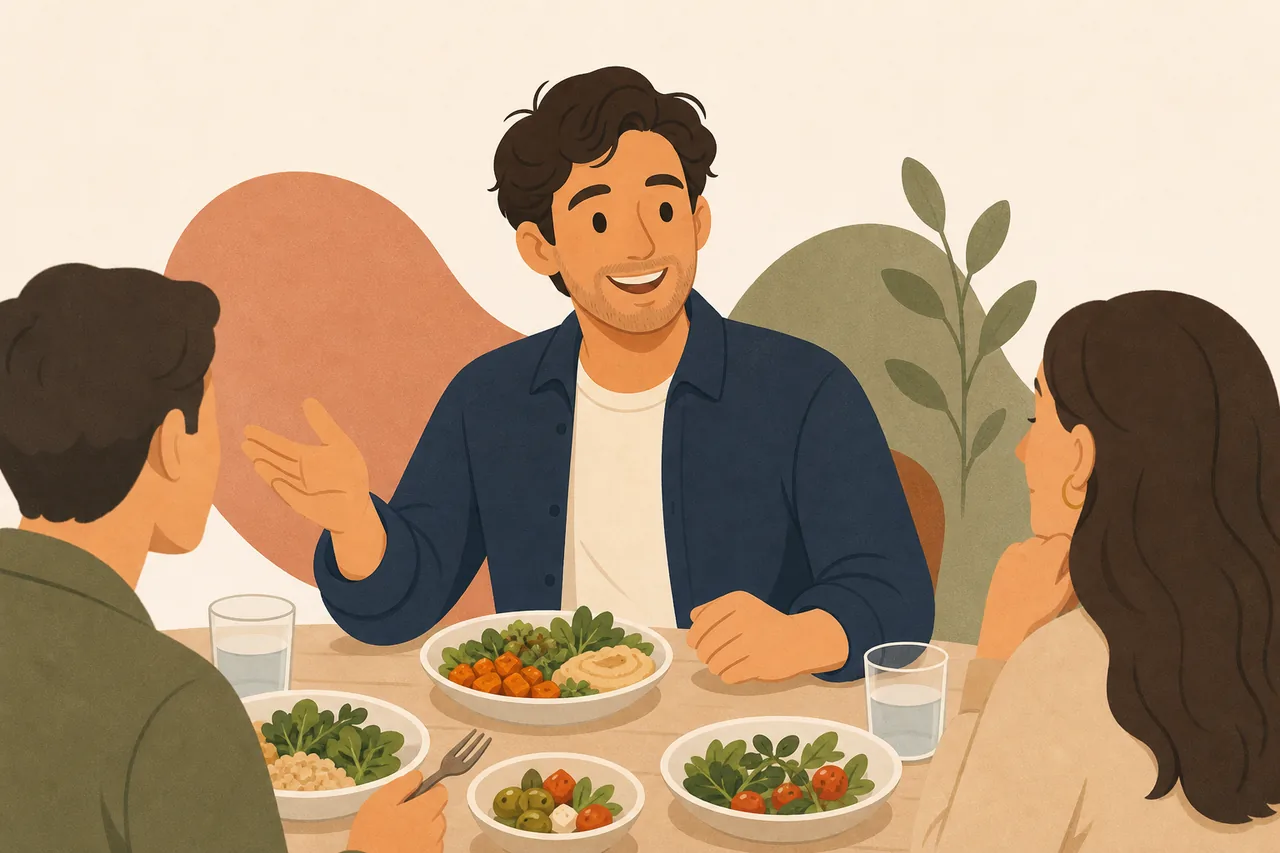
Explore this eating pattern
The Social Eater
Good food. Better company. Maybe one shared dessert.
Shared tablesCompany firstSocial rhythm
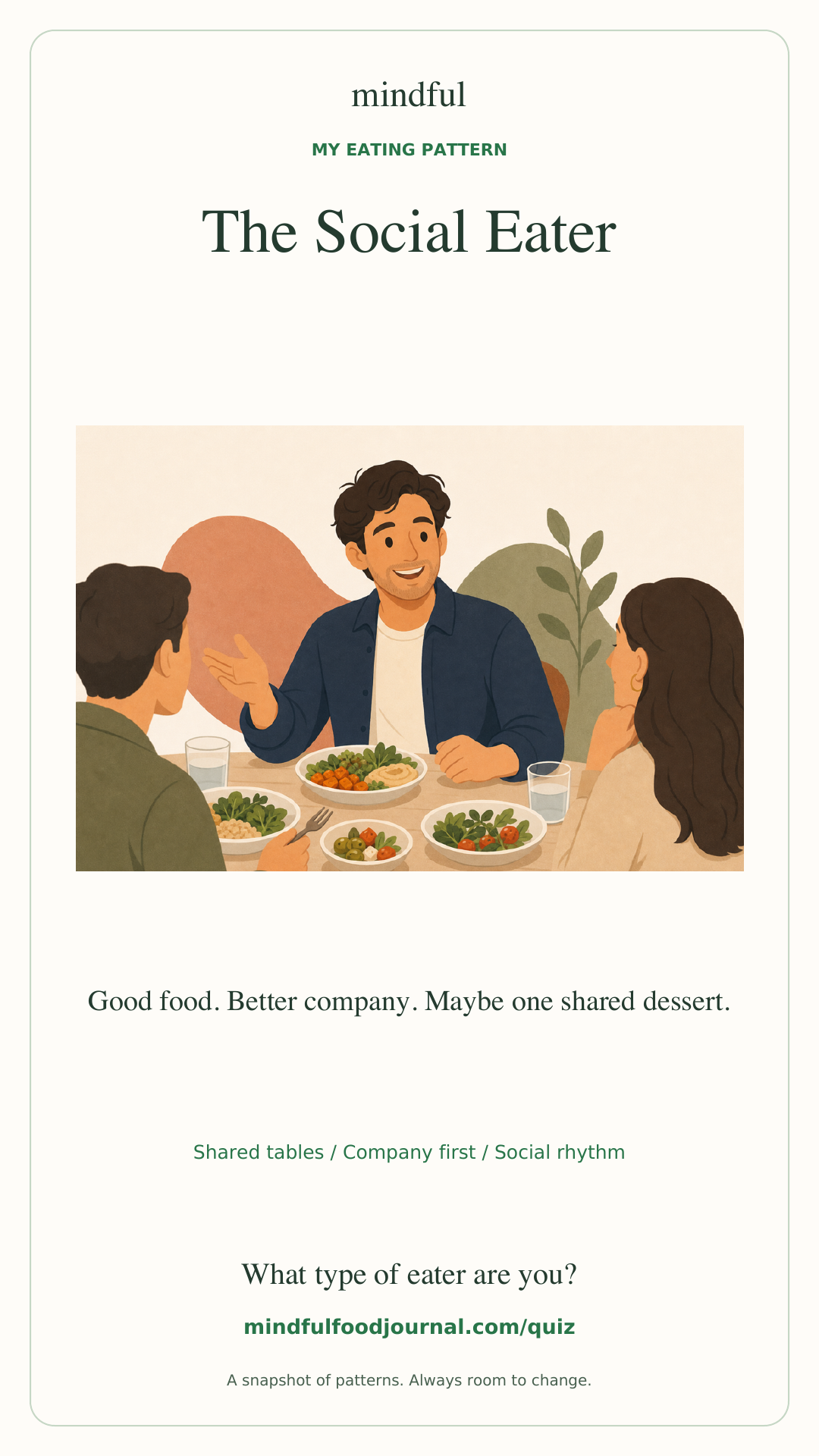
A snapshot of eating patterns, with room to change.
Who you eat with can shape what you choose and how the meal unfolds. Shared food may mean connection, hospitality, or celebration. This week explores how to stay part of that experience while making room for your own preferences and comfort.
A strength to keep
You value connection around food. Shared meals can be meaningful without everyone needing exactly the same thing.
One small step
Before ordering or accepting another serving, take a moment to notice what you would enjoy. You can stay engaged with the people around you.
Your free 10-page playbook
Your type explained.
Your next seven days planned.
Get your free playbook for The Social Eater: everyday examples, small experiments, and a printable seven-day worksheet.
- Recognize the situations that bring your pattern out.
- Try a seven-day plan made for this type.
- Keep a worksheet and a kinder plan for difficult days.
A look inside your actual playbook. Written for this type, with space to make it your own.
Overview
If this sounds like you
If you are The Social Eater, you may feel like you have two food personalities. Alone, you can be steady, reasonable, maybe even annoyingly competent. Then you get around friends, family, restaurants, office food, shared plates, and suddenly your quiet plan has left the room. Sometimes it is not even about wanting the food. It is about not wanting to make the moment awkward.
This pattern can be frustrating because it does not feel like a simple willpower issue. In your normal routine, you may know exactly what to do. The difficulty appears when the room changes and the room starts making some of the decisions for you.
At your best, you are flexible and connected. You care about being present with people, not turning every dinner into a private nutrition negotiation. That is a strength, and it is part of having a healthy food life.
The trouble starts when social ease quietly becomes social surrender. You say yes because it is easier, because everyone else is, because it looks good, because the food is there, because someone made it for you, or because you do not want to be the person making things awkward.
For The Social Eater, the goal is not to avoid people or become rigid in public. It is to build defaults that let you participate without abandoning yourself.
What drives it
The mechanism underneath
Social settings, restaurants, family meals, office lunches, weekends, and the desire not to disappoint people drive intake more than hunger or plan.
Why this happens
Shared food lowers decision friction because everyone is participating.
Restaurants and events remove your normal structure and portions.
Social pressure can make saying no feel more emotionally uncomfortable than eating, especially when food is offered directly.
Common signs
Weekends look completely different from weekdays.
You eat in ways you would not choose alone because the group context carries you along.
You accept food you do not really want because refusing feels rude, complicated, or disappointing.
Strengths & challenges
What helps you, and where it can get in your way
What works in your favor
You value connection, flexibility, and shared experience. A good food life needs those things.
Where it can get in your way
Five steady days can be canceled out by two unplanned ones. The bigger cost is when you start avoiding social life just to stay in control.
First steps
What to do with this result this week
The progress trap
The trap is thinking the only choices are total control or total surrender. The middle is where this pattern gets much easier.
1
Pick one social anchor before you arrive: protein first, one plate, slower drinks, or dessert if it is truly worth it.
2
Pre-log or loosely estimate restaurant meals so the situation feels less mysterious.
3
Practice one polite refusal line so social pressure does not have to invent your answer.
How Mindful helps
Start building a calmer food system
1
Helps you plan around social meals without treating them like emergencies.
2
Makes restaurant and shared-food logging less tedious, so you do not need perfect conditions.
3
Supports a middle path: present with people, still aware of yourself.
A quick note
This quiz is for self-reflection, not diagnosis or medical advice. If food, tracking, weight, or eating patterns feel distressing or unsafe, consider working with a registered dietitian, clinician, or mental health professional.