Loading Results...
Find my type
Explore this eating pattern
The Skipper
One more task. Then lunch. Probably.
Task focusedBusy daysDelayed meals
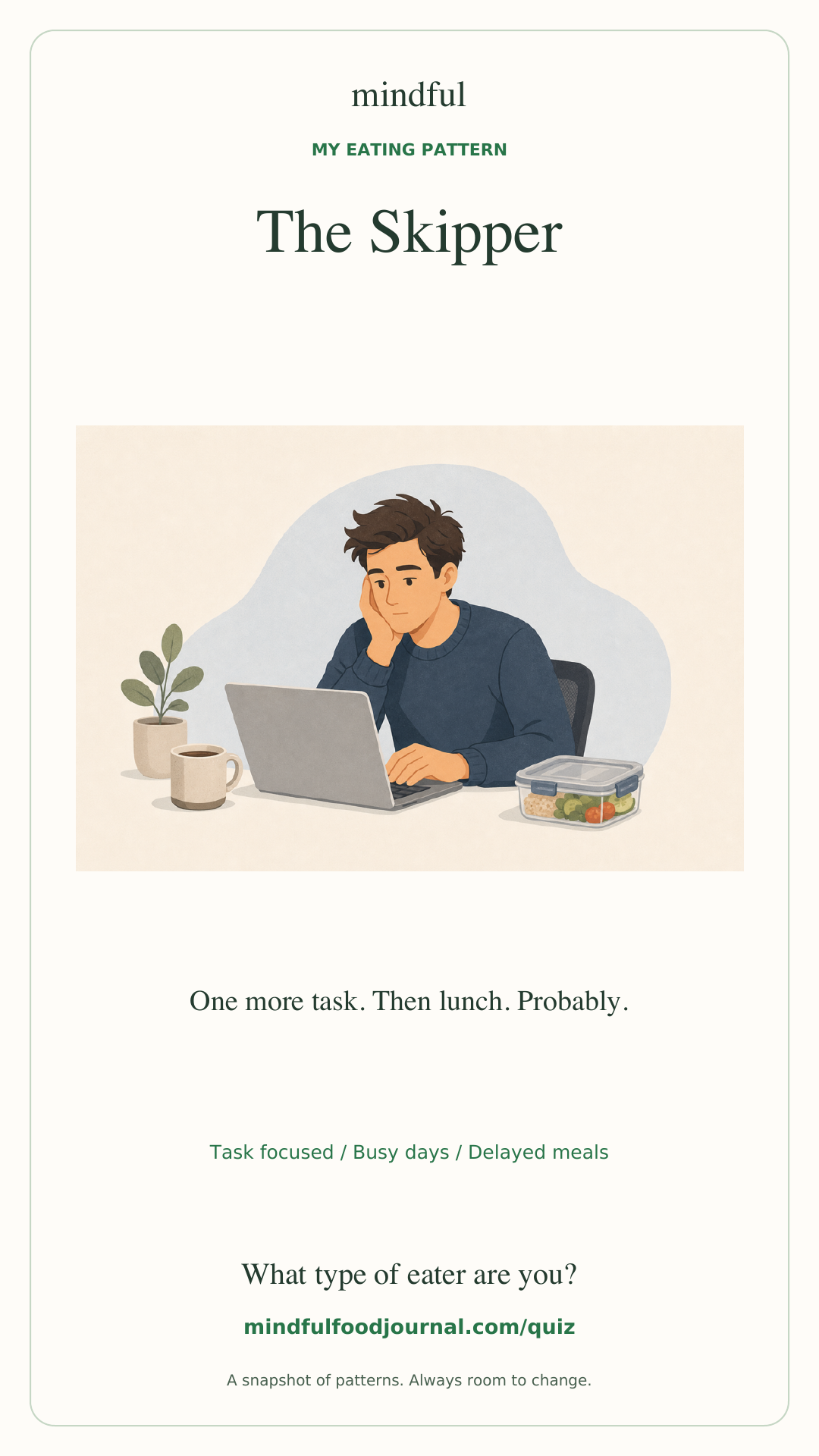
A snapshot of eating patterns, with room to change.
When life gets busy, eating can slide down the list. You may notice your appetite most clearly once the rush ends. This playbook helps you make room for food during the day, with options that do not require an ideal schedule or an elaborate meal.
A strength to keep
You bring focus and commitment to the things that matter to you. That same care can include making time to eat.
One small step
Choose one point in tomorrow's schedule when you can eat, and put an easy meal or snack within reach.
Your free 10-page playbook
Your type explained.
Your next seven days planned.
Get your free playbook for The Skipper: everyday examples, small experiments, and a printable seven-day worksheet.
- Recognize the situations that bring your pattern out.
- Try a seven-day plan made for this type.
- Keep a worksheet and a kinder plan for difficult days.
A look inside your actual playbook. Written for this type, with space to make it your own.
Overview
If this sounds like you
If you are The Skipper, there is a good chance the first half of your day looks weirdly impressive from the outside. You are working, handling things, running late, drinking coffee, maybe feeling a little proud that food is not distracting you. Then the evening arrives, and the appetite you postponed all day walks in with notes.
This pattern often feels confusing because it can look like self-control until it suddenly does not. You may spend most of the day barely eating, then wonder why the night feels so much harder than the morning.
At your best, you are focused, capable, and good at pushing through. You can get a lot done without needing constant comfort or distraction. But your body is not a productivity app. When it does not get enough fuel, it tends to make its needs known later, usually with less subtlety than anyone would prefer.
Evening eating can then feel like a character flaw when it is really a predictable rebound. The issue is not that you become a different person at night. It is that nighttime is often the first moment when hunger has enough space to speak loudly.
For The Skipper, progress usually starts earlier than the moment that feels like the problem. A steadier day makes the evening version of you much easier to work with.
What drives it
The mechanism underneath
Meals get delayed, minimized, skipped, or grabbed on the run when the day has no stable rhythm. Later, hunger catches up with interest.
Why this happens
Work, caregiving, errands, overscheduling, or stress make meals feel optional until they suddenly are not.
Caffeine and adrenaline can mask hunger during the day.
A day without routine makes eating reactive, so evening becomes the first quiet moment when appetite can finally get your attention.
Common signs
Breakfast is coffee, lunch is accidental, and dinner has to do too much emotional and physical work.
You feel like you barely eat, but the day still ends with a lot of unplanned intake.
You eat on the run and may not remember the full shape of what you had until the day is over.
Strengths & challenges
What helps you, and where it can get in your way
What works in your favor
You bring focus and commitment to your day. Making space for food can be part of that same care.
Where it can get in your way
Night eating can make weight change confusing because it does not always feel like a meal. Skipping also tends to tax energy, mood, focus, and sleep.
First steps
What to do with this result this week
The progress trap
Waiting for every task to be finished can leave meals to chance. Try making one earlier eating opportunity easier to access.
1
Add one reliable anchor meal or protein-forward snack before the evening.
2
Log meals by time of day for a week so the shape of your intake becomes obvious.
3
Have an emergency option ready for busy days: something boring, fast, and good enough.
How Mindful helps
Start building a calmer food system
1
Shows the shape of your day, not just the total at the end.
2
Makes skipped meals visible before nighttime hunger takes over the steering wheel.
3
Helps you build a steadier rhythm with fast logging instead of another complicated food system.
A quick note
This quiz is for self-reflection, not diagnosis or medical advice. If food, tracking, weight, or eating patterns feel distressing or unsafe, consider working with a registered dietitian, clinician, or mental health professional.