Loading Results...
Find my type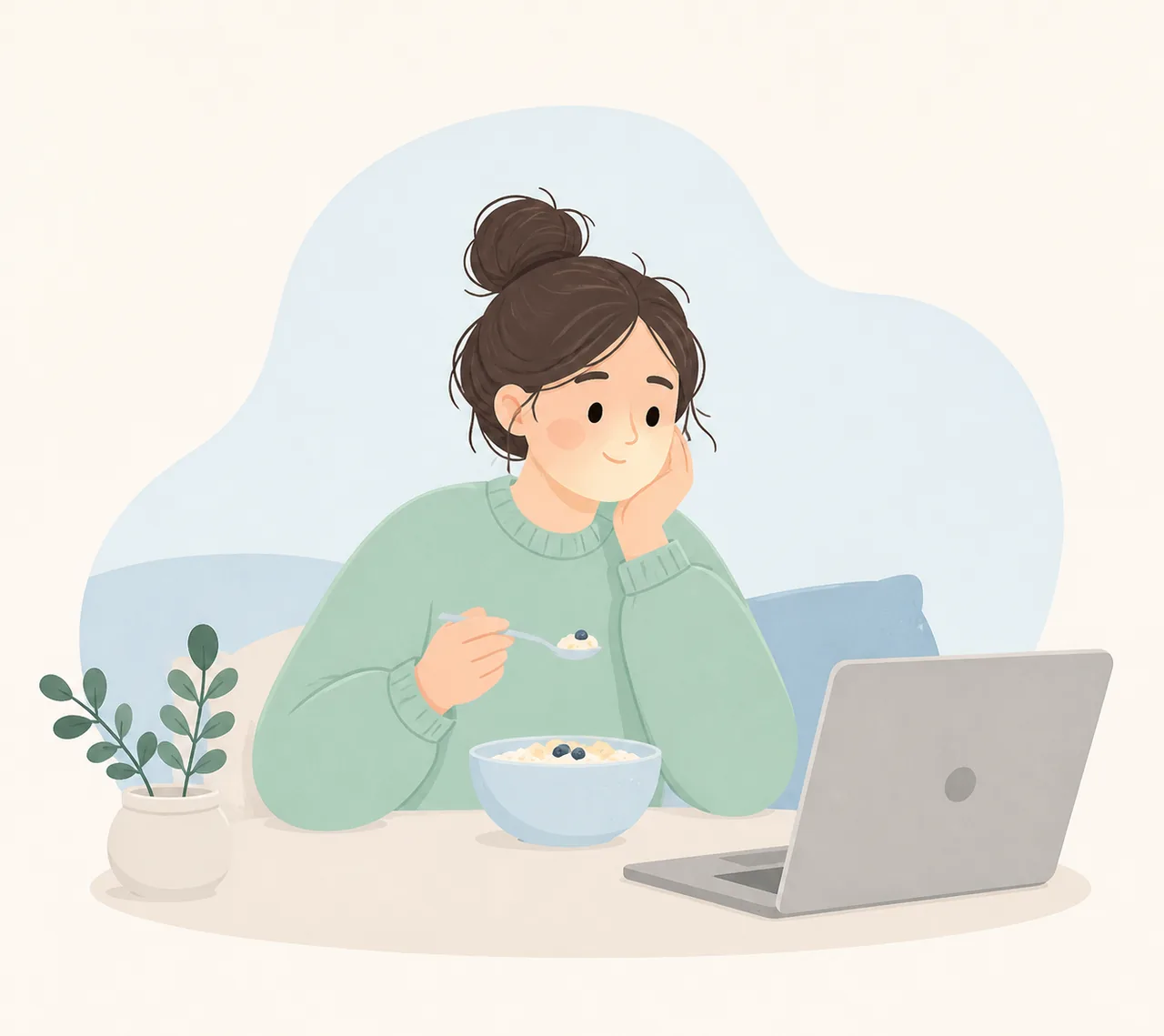
Explore this eating pattern
The Habitual Eater
Same show, same seat, familiar snack.
Familiar ritualsRoutine ledAutomatic moments
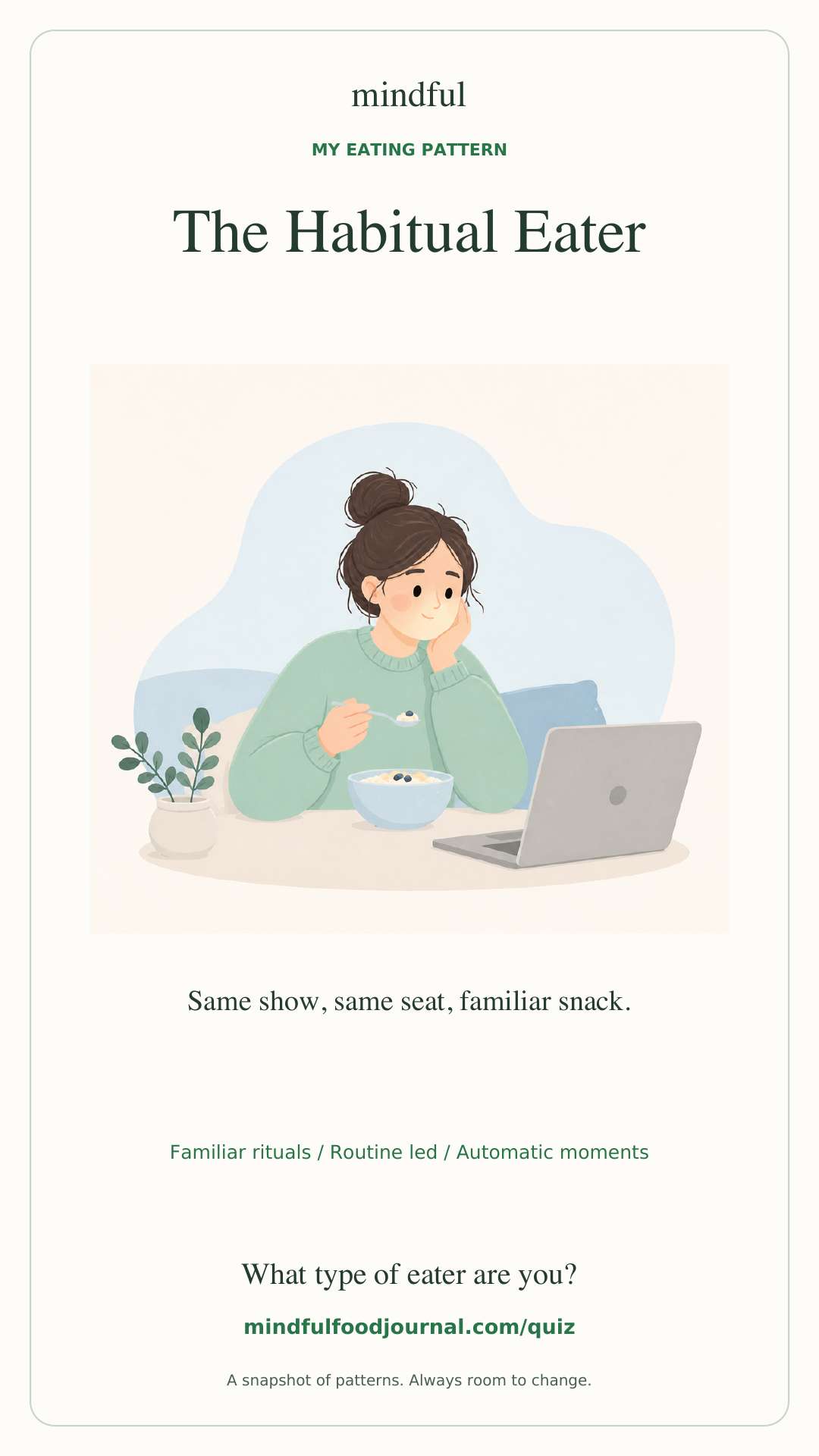
A snapshot of eating patterns, with room to change.
Some eating moments arrive as part of a routine: a show starts, work ends, or a particular time comes around. Familiarity can be comforting and useful. This week helps you notice one routine and make a little more room for choosing it deliberately.
A strength to keep
You can build reliable rituals. A routine you enjoy can remain part of your life while becoming easier to notice and adjust.
One small step
At one familiar snack time, pause long enough to choose what you want before continuing the routine.
Your free 10-page playbook
Your type explained.
Your next seven days planned.
Get your free playbook for The Habitual Eater: everyday examples, small experiments, and a printable seven-day worksheet.
- Recognize the situations that bring your pattern out.
- Try a seven-day plan made for this type.
- Keep a worksheet and a kinder plan for difficult days.
A look inside your actual playbook. Written for this type, with space to make it your own.
Overview
If this sounds like you
If you are The Habitual Eater, you may not always feel like you chose to eat. It is just what happens when the show starts, when work ends, when you sit in that chair, when you pass that cabinet, or when the evening gets quiet. Sometimes you look down and realize eating already happened while your attention was somewhere else.
This pattern is sneaky because it often feels ordinary. Nothing dramatic has to happen. No huge emotion, no big social event, no obvious binge. A familiar cue appears, and the food follows.
At your best, you are consistent. Your brain likes rhythms and defaults. That can be useful when those defaults support you. The trouble starts when old routines keep making food decisions that your current goals would not make.
Boredom can be part of this, but it is not the whole story. Sometimes the trigger is time, place, fatigue, a screen, a transition, or simply the expectation that this moment usually includes food.
For The Habitual Eater, progress is not about forcing every choice through discipline. It is about interrupting the cue just long enough to choose the routine you actually want.
What drives it
The mechanism underneath
Repeated cues turn into eating defaults. Time of day, location, screens, boredom, transitions, or familiar rituals can start the eating before hunger, fullness, or attention are consulted.
Why this happens
Repeated contexts teach the brain to expect food before hunger is checked.
Boredom and transitions make familiar snacks feel like something to do.
Screens, couches, commutes, and evening routines can become paired with eating until hunger and fullness cues get quiet.
Common signs
You eat at certain times or places even when hunger is unclear.
A specific activity feels incomplete without a snack or drink.
You sometimes finish eating and realize you barely registered the taste, pace, or amount.
Strengths & challenges
What helps you, and where it can get in your way
What works in your favor
You are responsive to routines, which means better routines can work for you quickly once they are designed on purpose.
Where it can get in your way
When eating is tied to cues instead of hunger, the pattern can keep repeating even when the food is not satisfying. You may feel like you need more willpower when what you really need is a different default.
First steps
What to do with this result this week
The progress trap
The trap is treating every repeated cue like a willpower test. If the environment and routine stay the same, the habit keeps getting the first vote.
1
Pick one repeat eating cue and add a pause before it: water, a short walk, or a quick hunger check.
2
Change the setting around your most automatic snack so the habit has to slow down.
3
Decide what the routine is for: hunger, boredom, comfort, transition, or reward. Then choose a response that matches the real need.
How Mindful helps
Start building a calmer food system
1
Helps you notice which cues show up before eating.
2
Turns repeated snack moments into visible patterns instead of vague habits.
3
Makes it easier to experiment with small routine changes and see what actually helps.
A quick note
This quiz is for self-reflection, not diagnosis or medical advice. If food, tracking, weight, or eating patterns feel distressing or unsafe, consider working with a registered dietitian, clinician, or mental health professional.