Loading Results...
Find my type
Explore this eating pattern
The Emotional Eater
Some days need a familiar bowl and a soft landing.
Comfort seekingFamiliar flavoursFeeling led
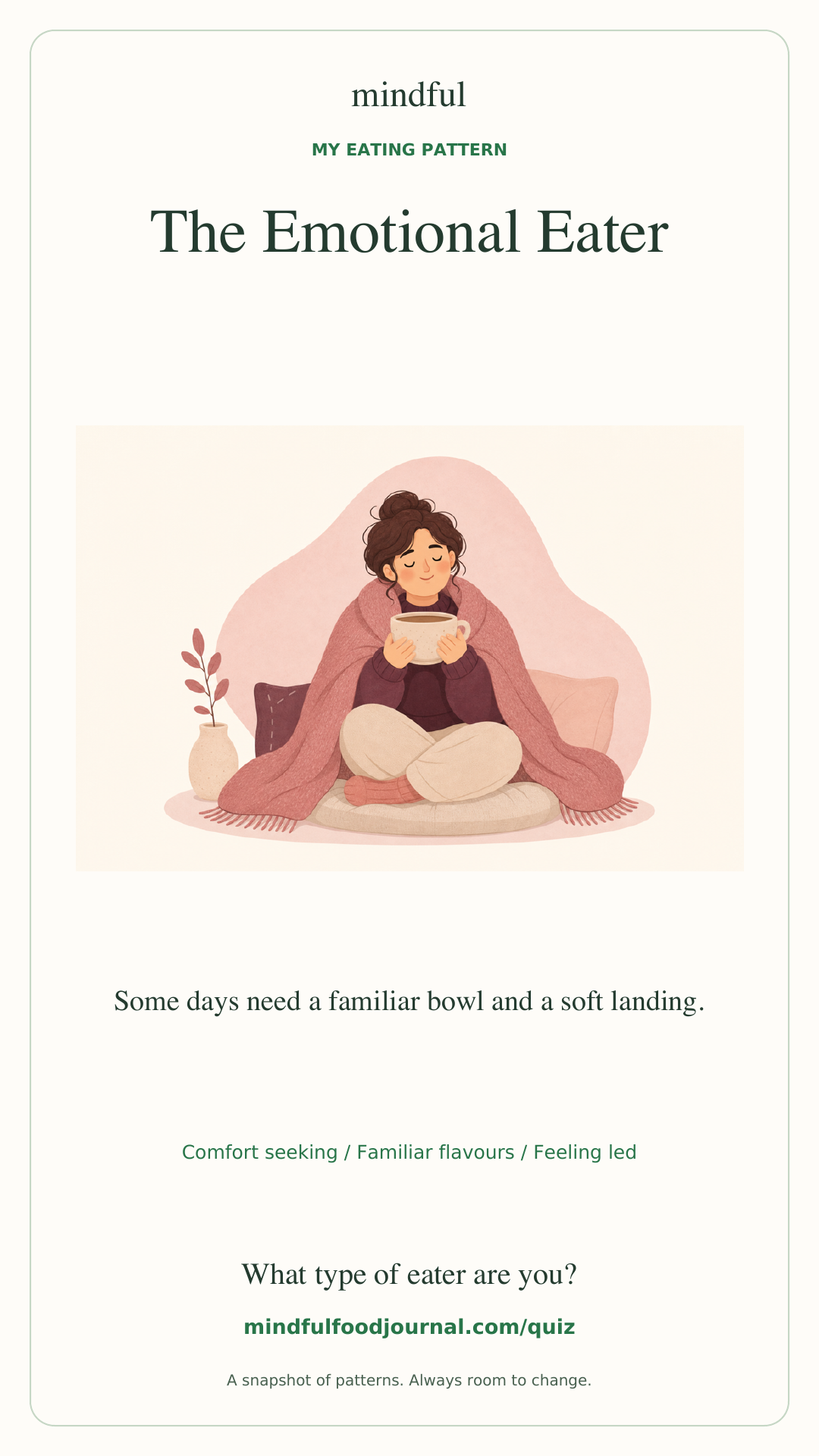
A snapshot of eating patterns, with room to change.
Food may offer comfort when the day feels heavy, lonely, or overstimulating. That does not make comfort a mistake. This week is an invitation to notice what is happening around those moments and make room for other kinds of support alongside food.
A strength to keep
You notice that comfort matters. Paying attention to what helps you feel cared for can open up more choices.
One small step
At one comfort-food moment, gently ask what else might help alongside eating: rest, company, quiet, or practical support.
Your free 10-page playbook
Your type explained.
Your next seven days planned.
Get your free playbook for The Emotional Eater: everyday examples, small experiments, and a printable seven-day worksheet.
- Recognize the situations that bring your pattern out.
- Try a seven-day plan made for this type.
- Keep a worksheet and a kinder plan for difficult days.
A look inside your actual playbook. Written for this type, with space to make it your own.
Overview
If this sounds like you
If you are The Emotional Eater, the hardest part may be that you often know what is happening while it is happening. Part of you can see that you are not really hungry. Another part is tired, stressed, lonely, bored, or overwhelmed enough to reach for food anyway.
This pattern can feel deeply personal because food is not just food in these moments. It becomes relief, company, softness, distraction, or something that asks nothing from you at the end of a hard day.
At your best, you are emotionally aware. You notice what is happening inside you, even when it is uncomfortable. The challenge is that awareness by itself does not always create another option. Sometimes it only means you are watching yourself do the thing you wish you were not doing.
That does not mean you are broken or undisciplined. It means food has become a reliable regulator. It changes your state quickly, and when a feeling is loud enough, quick relief can beat long-term intention.
For The Emotional Eater, progress begins when food stops being the only lever. You do not need to remove comfort from eating. You need enough space to choose whether food is actually the comfort you need in that moment.
What drives it
The mechanism underneath
Food becomes a way to regulate stress, sadness, loneliness, boredom, or overwhelm before hunger has a chance to answer.
Why this happens
Food is accessible, predictable, and can change your state quickly.
Strong feelings can make future consequences feel far away.
If food has been the main coping tool for a while, the brain reaches for it before checking for alternatives.
Common signs
You can identify the emotion and still feel pulled toward food.
The food choice feels urgent, private, or hard to interrupt.
After eating, the original feeling is still there, sometimes with guilt added on top.
Strengths & challenges
What helps you, and where it can get in your way
What works in your favor
You are responsive to your inner life. The goal is not to become emotionless around food; the goal is to have more than one lever to pull.
Where it can get in your way
Food may soften the feeling briefly, but it often leaves the original feeling waiting nearby, now joined by guilt or physical discomfort. A very unhelpful group project.
First steps
What to do with this result this week
The progress trap
The trap is trying to shame yourself out of emotional eating. Shame is another uncomfortable feeling, which can send you straight back to the same coping tool.
1
Name the feeling before deciding what to eat: stress, loneliness, boredom, anger, or fatigue.
2
Add a two-minute pause, not as a rule, but as a chance to choose with more information.
3
Build a short list of non-food relief options that are actually realistic on a hard day.
How Mindful helps
Start building a calmer food system
1
Creates a pause between the feeling and the food without demanding perfection.
2
Helps you spot which emotions most often lead to eating when hunger is not present.
3
Keeps the log neutral, so a hard moment becomes information instead of evidence against you.
A quick note
This quiz is for self-reflection, not diagnosis or medical advice. If food, tracking, weight, or eating patterns feel distressing or unsafe, consider working with a registered dietitian, clinician, or mental health professional.