Loading Results...
Find my type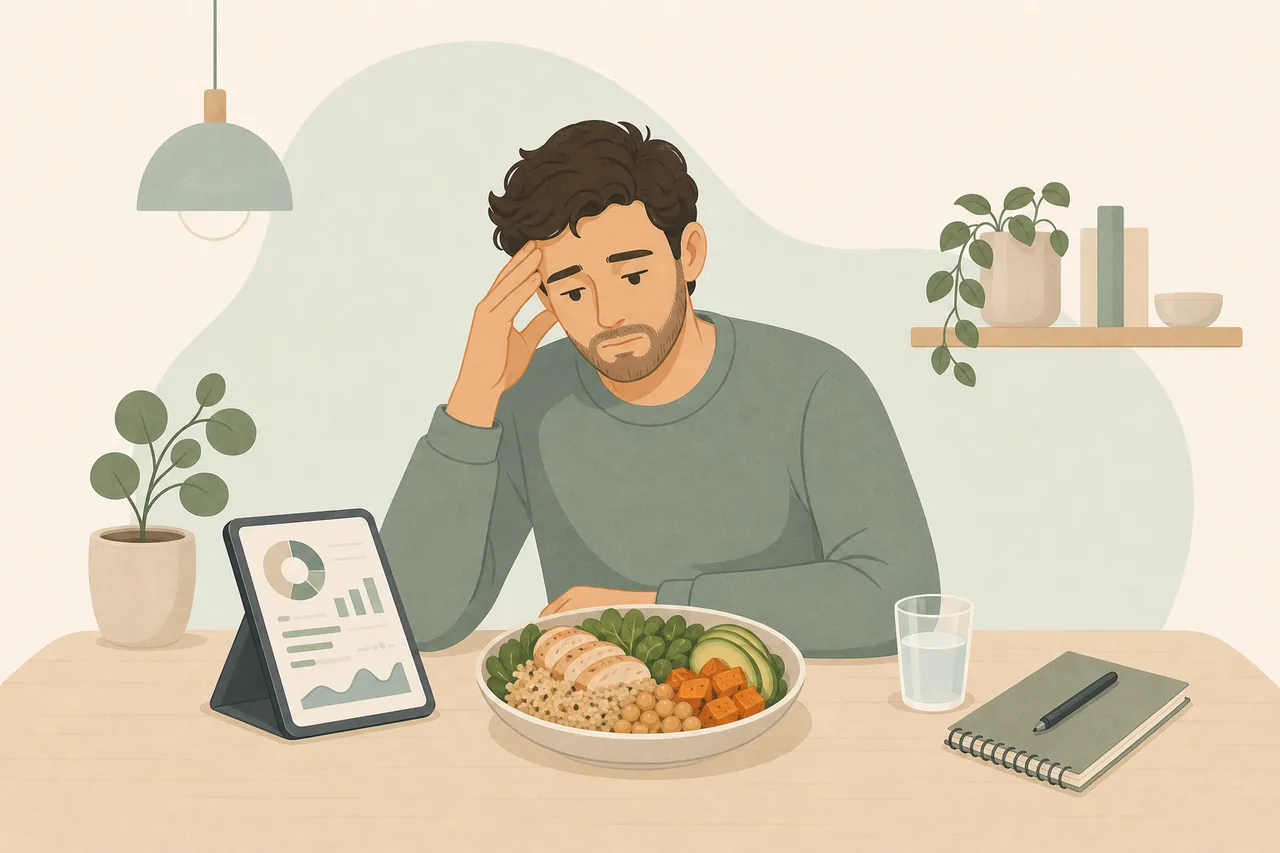
Explore this eating pattern
The Burnt-Out Tracker
The details matter. So does having room to live.
Detail awareGoal mindedReady for ease
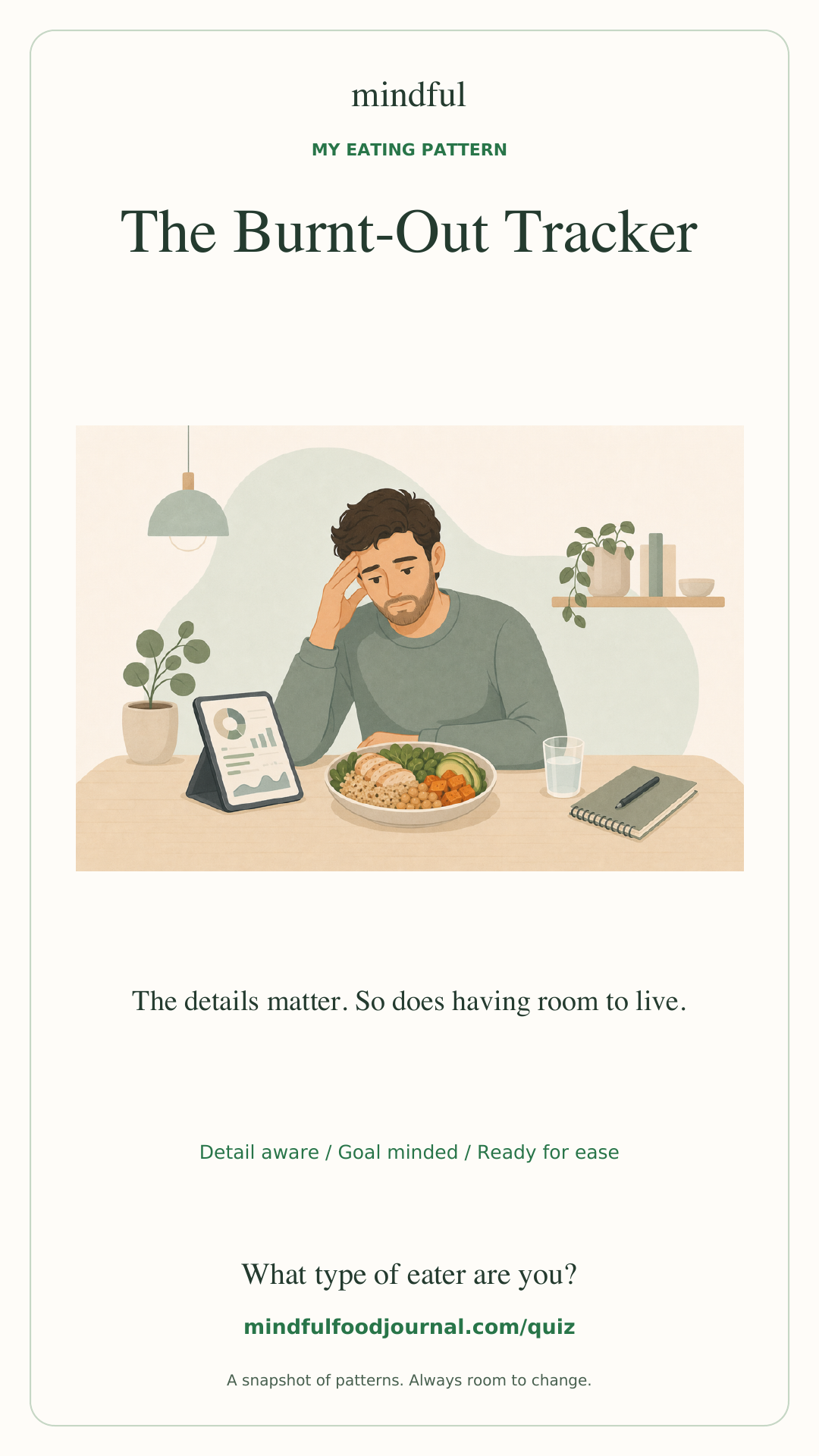
A snapshot of eating patterns, with room to change.
Tracking may once have felt helpful and now feel demanding. You might know the numbers while wishing meals needed less attention. This playbook explores which information still serves you and where you may want less pressure, more support, or a different approach.
A strength to keep
You notice detail and can reflect on patterns. Those skills remain yours even when you choose a simpler way to use them.
One small step
Name one part of tracking that helps and one that feels draining. If tracking is part of clinical care, discuss changes with your care provider.
Your free 10-page playbook
Your type explained.
Your next seven days planned.
Get your free playbook for The Burnt-Out Tracker: everyday examples, small experiments, and a printable seven-day worksheet.
- Recognize the situations that bring your pattern out.
- Try a seven-day plan made for this type.
- Keep a worksheet and a kinder plan for difficult days.
A look inside your actual playbook. Written for this type, with space to make it your own.
Overview
If this sounds like you
If you are The Burnt-Out Tracker, you may know the numbers before the meal even starts. Calories, macros, portions, targets, averages, streaks. You have probably used the apps, maybe the spreadsheet, and maybe the spreadsheet had tabs that were not strictly necessary but felt important at the time.
This pattern often begins with a very reasonable desire: clarity. You wanted to know what was happening. You wanted feedback. You wanted a system. And for a while, the system may have genuinely helped.
At your best, you have real nutrition literacy. You can spot patterns, estimate portions, and understand tradeoffs that many people never learn. That knowledge is valuable.
The problem is that the skill can become a cage. Eating without numbers feels uncertain, but eating with numbers feels exhausting. You may quit tracking to feel free, then restart because freedom starts to feel like drifting.
For The Burnt-Out Tracker, the next step is not necessarily deleting every app forever. It is making data smaller, kinder, and more useful, so numbers inform your choices without owning the meal.
What drives it
The mechanism underneath
Data once created control, but now the numbers can feel like the boss of the meal instead of useful context.
Why this happens
Tracking gave useful feedback at first, so the brain learned to treat numbers as safety.
Stopping can feel like losing control, especially if past breaks led to rebound eating.
Perfectionistic logging makes small uncertainty feel like failure.
Common signs
You estimate calories automatically, even when you are trying not to.
You cycle between deleting apps and reinstalling them with renewed intensity.
Meals feel less enjoyable when the numbers are unclear.
Strengths & challenges
What helps you, and where it can get in your way
What works in your favor
You have real nutrition literacy. That knowledge is valuable when it serves you instead of chasing you around the kitchen.
Where it can get in your way
Tracking burnout can create a loop: quit, feel relief, feel blind, restart harder. The relationship with food gets smaller each time.
First steps
What to do with this result this week
The progress trap
The trap is confusing visibility with control. Data is useful, but if every meal has to justify itself numerically, the system becomes too heavy to sustain.
1
Make tracking lighter again: log clearly, review trends, and spend less energy correcting tiny details that do not change the bigger picture.
2
Choose one meal per week to eat without optimizing, then reflect on how it actually went.
3
Use data to answer a question, not to grade your worth after every meal.
How Mindful helps
Start building a calmer food system
1
Keeps useful visibility while reducing manual food-database grind.
2
Shows reasoning and sources so tracking feels less like blind obedience to a number.
3
Supports a calibration mindset: learn from the data without letting it own the meal.
A quick note
This quiz is for self-reflection, not diagnosis or medical advice. If food, tracking, weight, or eating patterns feel distressing or unsafe, consider working with a registered dietitian, clinician, or mental health professional.