Vegan High-Protein Meal Plan: 7 Days at 1,800 Calories
A complete 7-day vegan high-protein meal plan around 1,800 calories per day, averaging about 157g of plant protein with recipes and a grocery list.
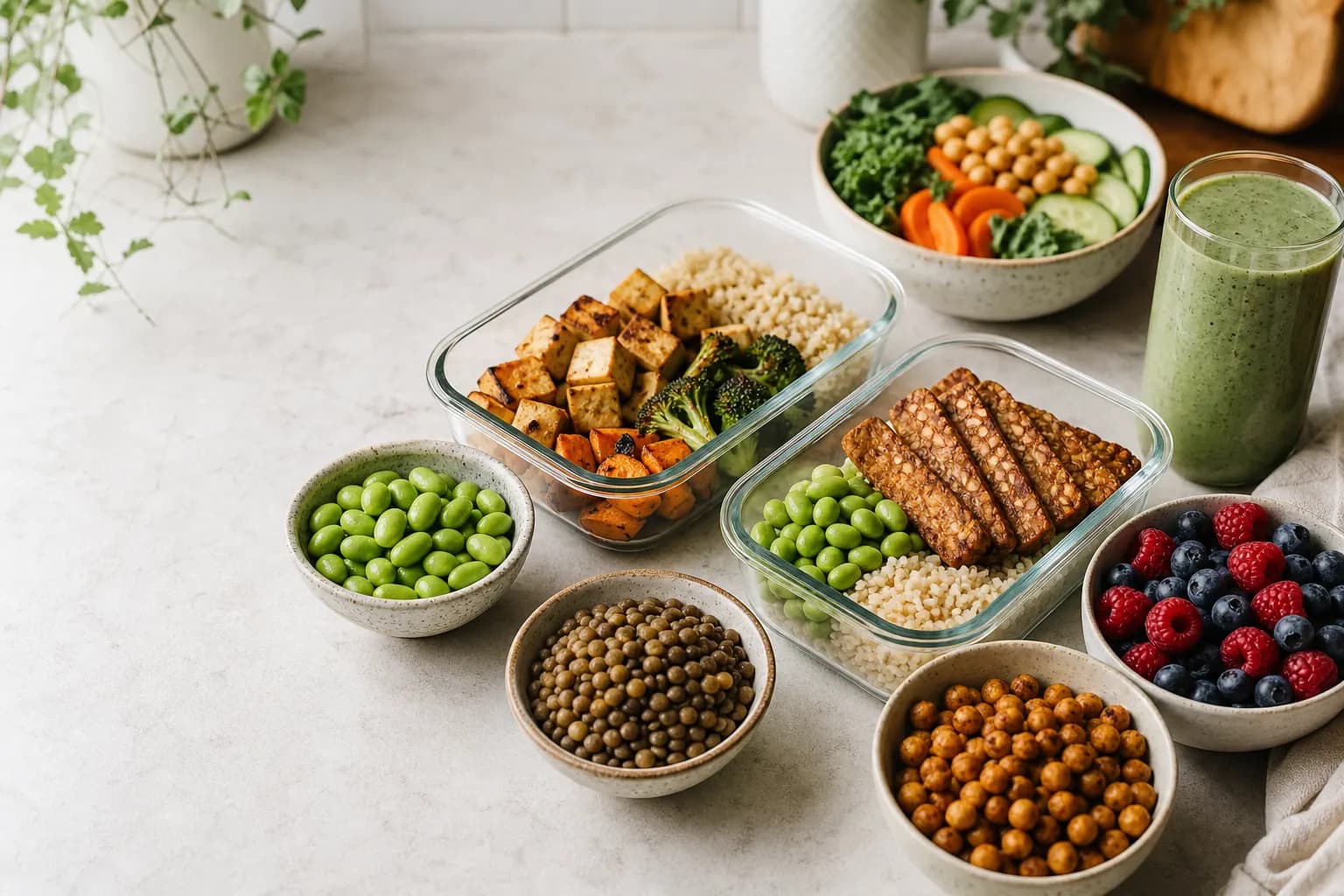
TL;DR. This 7-day vegan high-protein meal plan averages about 1,780 calories, 157g protein, 207g carbs, and 45g fat per day. The meals use high-protein tofu, tempeh, seitan, TVP, lentils, chickpeas, edamame, soy milk, soy yogurt, and plant protein powder because those are the plant foods that make a 1,800-calorie high-protein target realistic. Plant proteins can support muscle retention and training goals, but many are less digestible or lower in leucine than animal proteins, so aiming slightly higher and spreading protein across the day is a practical strategy12. Meal macros are rounded from USDA-style values and common label values, so brands will vary.
Vegan high-protein meal plans usually fail in one of two ways: they quietly land at 80 to 100g of protein, or they hit the protein target by pushing calories much higher than the headline says. This plan is built to avoid both problems. It uses normal grocery-store foods while recognizing that, at 1,800 calories, a vegan 150g+ protein day usually needs soy foods, seitan or TVP, and a plant protein shake.
If you eat animal products, we also have a high-protein meal plan at 1,800 calories. The calorie target is similar, but the food choices and macro tradeoffs are different.
A note before reading. This article is general nutrition education, not medical advice. If you have a current or past eating disorder, are pregnant or nursing, are managing a health condition, or have soy, gluten, legume, or nut allergies, work with a registered dietitian or physician. This plan uses soy and gluten heavily because they are the most protein-dense vegan staples. Nutrition values are rounded estimates from USDA FoodData Central and common product labels; specific brands can shift the numbers by 5-15%3.
Why the protein target is high
This plan averages about 157g of protein per day, using protein-dense vegan staples such as tofu, tempeh, seitan, TVP, edamame, soy yogurt, and plant protein powder.
Plant proteins can absolutely support muscle gain, muscle retention, and weight loss. The catch is that some plant proteins have lower digestibility scores and lower leucine density than animal proteins, which means the same labeled gram total may produce a slightly smaller muscle protein synthesis response12. That does not mean vegan diets are inadequate. It means the practical setup matters more.
The three highest-leverage moves are:
- Use dense plant proteins daily: tofu, tempeh, seitan, TVP, edamame, soy milk, soy yogurt, lentils, beans, and pea or soy protein powder.
- Distribute protein across the day: most meals in this plan land around 30 to 45g protein.
- Use protein powder as a tool: the plan uses about 1 to 2 scoops per day because it is the cleanest way to add 24g protein without adding 250 to 400 calories of extra legumes or grains.
If you prefer not to use protein powder, this exact 1,800-calorie structure will be harder. You can still eat a high-protein vegan diet, but you will likely land closer to 120 to 135g protein unless you add more seitan, TVP, or calories.
Weekly macro overview
Swipe across to read the full table.
| Day | Calories | Protein | Carbs | Fat |
|---|---|---|---|---|
| Day 1 | 1,790 | 161g | 207g | 45g |
| Day 2 | 1,770 | 154g | 203g | 46g |
| Day 3 | 1,745 | 155g | 213g | 32g |
| Day 4 | 1,765 | 151g | 209g | 49g |
| Day 5 | 1,805 | 162g | 213g | 42g |
| Day 6 | 1,780 | 158g | 197g | 49g |
| Day 7 | 1,810 | 160g | 207g | 51g |
| Average | 1,781 | 157g | 207g | 45g |
Rounding note: meal macros are rounded to the nearest 5 to 10 calories and 1g macro. The daily totals are calculated from those meal totals, not from the exact gram weight of every brand-specific ingredient.
Product assumptions: these numbers assume high-protein or super-firm tofu with roughly 14g protein per 3 oz, plant protein powder around 120 calories and 24g protein per scoop, and protein-fortified soy yogurt around 150 calories and 15g protein per cup. Standard extra-firm tofu and regular almond or coconut yogurt can be much lower in protein. If your labels are lower, add seitan, TVP, or an extra half scoop of protein powder.
Sunday prep
Do this once and the rest of the week becomes mostly assembly.
Bake 3 blocks of high-protein or super-firm tofu. Press the tofu for 20 to 30 minutes if needed, cube it, then toss with soy sauce, garlic powder, onion powder, and a small amount of oil. Bake at 425 F for 25 to 30 minutes, flipping once. You will use about 31 oz across the week, so 3 standard blocks gives you enough buffer.
Cook lentils. Cook 1.25 cups dry lentils, which yields roughly 3 cups cooked. Use them for curry and bowls.
Cook brown rice, quinoa, and farro. Cook about 1 cup dry brown rice, 1/2 cup dry quinoa, and 3/4 cup dry farro. Store separately.
Marinate tempeh. Slice 2 blocks of tempeh. Marinate with soy sauce, lime juice, garlic, smoked paprika, and a little maple syrup. Pan-sear portions as needed.
Prep vegetables. Roast 2 sheet pans of broccoli, bell peppers, zucchini, onion, carrots, and sweet potato with a small amount of oil. Wash greens, cucumbers, tomatoes, and herbs.
Portion protein powder. You will use about 10 to 11 scoops across the week. If your powder has less than 22g protein per scoop, add a half scoop to the lower-protein days.
Day 1
Daily total: ~1,790 calories, 161g protein, 207g carbs, 45g fat
Breakfast: Tofu scramble with toast and soy milk
~395 calories, 41g protein, 36g carbs, 15g fat
- 5 oz high-protein or super-firm tofu, crumbled
- 1 tablespoon nutritional yeast
- Spinach, bell pepper, turmeric, garlic powder, and kala namak if you have it
- 1 teaspoon olive oil
- 1 slice whole-grain toast
- 1 cup unsweetened soy milk
Cook the vegetables first, then add crumbled tofu and seasonings. The soy milk on the side is doing real protein work here, so use soy rather than almond or oat milk.
Lunch: Seitan, chickpea, edamame, and quinoa bowl
~515 calories, 45g protein, 55g carbs, 14g fat
- 3 oz seitan, sliced
- 1/3 cup chickpeas
- 1/3 cup cooked quinoa
- 1/2 cup shelled edamame
- 1 cup roasted vegetables
- 2 teaspoons tahini thinned with lemon juice and water
Seitan is very protein-dense but low in lysine, so pairing it with chickpeas and edamame makes the meal more balanced.
Snack: Protein shake and apple
~215 calories, 24g protein, 28g carbs, 2g fat
- 1 scoop pea or soy protein
- 1 medium apple
- Water and ice
Dinner: Lentil TVP curry with rice
~475 calories, 34g protein, 74g carbs, 6g fat
- 1 cup cooked lentils
- 1/3 cup dry TVP, rehydrated
- 1/3 cup cooked brown rice
- 1/3 cup light coconut milk
- Onion, garlic, ginger, curry powder, spinach, and lime
Rehydrate the TVP in hot water or vegetable broth, then simmer it with the lentils, coconut milk, spices, and spinach. Make 2 servings so Day 3 lunch is ready.
Evening snack: Edamame
~190 calories, 17g protein, 14g carbs, 8g fat
- 1 cup shelled edamame
- Sea salt, chili flakes, or lemon
Day 2
Daily total: ~1,770 calories, 154g protein, 203g carbs, 46g fat
Breakfast: Protein overnight oats
~425 calories, 38g protein, 46g carbs, 12g fat
- 1/2 cup rolled oats
- 1 scoop pea or soy protein
- 1 cup unsweetened soy milk
- 2 teaspoons chia seeds
- 1/2 cup berries
- Cinnamon
Stir everything together the night before. Add a splash of water in the morning if it gets too thick.
Lunch: Tempeh chickpea salad with pita
~475 calories, 36g protein, 47g carbs, 21g fat
- 4 oz tempeh, pan-seared
- 1/2 cup chickpeas
- 3 cups mixed greens
- Cucumber, tomato, carrot, and herbs
- 1 tablespoon hummus thinned with lemon juice
- 1 tablespoon pumpkin seeds
Snack: Banana protein shake
~225 calories, 25g protein, 31g carbs, 2g fat
- 1 scoop pea or soy protein
- 1 medium banana
- Water and ice
Dinner: Tofu pad thai
~495 calories, 40g protein, 71g carbs, 9g fat
- 6 oz high-protein or super-firm tofu
- 2 oz dry rice noodles
- 1/4 cup shelled edamame
- Bean sprouts, carrot, scallions, and lime
- 1 teaspoon chopped peanuts
- Sauce: soy sauce, lime juice, rice vinegar, maple syrup, and sriracha
Pan-sear the tofu, cook the noodles separately, then toss everything together with the sauce.
Evening snack: High-protein soy yogurt
~150 calories, 15g protein, 8g carbs, 2g fat
- 1 cup protein-fortified soy yogurt
- Cinnamon or berries
Regular coconut or almond yogurt usually has very little protein. Read the label here.
Day 3
Daily total: ~1,745 calories, 155g protein, 213g carbs, 32g fat
Breakfast: Soy yogurt parfait with protein
~420 calories, 34g protein, 42g carbs, 11g fat
- 1 cup protein-fortified soy yogurt
- 1/2 scoop pea or soy protein mixed in
- 1/2 cup berries
- 1/4 cup low-sugar granola
- 1 tablespoon hemp seeds
Lunch: Leftover lentil TVP curry
~535 calories, 37g protein, 86g carbs, 7g fat
- 1 serving lentil TVP curry from Day 1
- 1 cup steamed broccoli on the side
Snack: Berry protein shake
~185 calories, 26g protein, 13g carbs, 5g fat
- 1 scoop pea or soy protein
- 1 cup unsweetened almond milk
- 1/2 cup frozen berries
Dinner: Seitan and white bean stew
~495 calories, 54g protein, 60g carbs, 4g fat
- 5 oz seitan
- 1/2 cup white beans
- 1/2 cup diced tomatoes
- Kale or spinach
- Onion, garlic, smoked paprika, Italian herbs
- 1 small whole-grain roll
Evening snack: Hummus and vegetables
~110 calories, 4g protein, 12g carbs, 5g fat
- 2 tablespoons hummus
- Raw vegetables
Day 4
Daily total: ~1,765 calories, 151g protein, 209g carbs, 49g fat
Breakfast: Tofu breakfast burrito
~465 calories, 47g protein, 54g carbs, 14g fat
- 5 oz high-protein or super-firm tofu, crumbled and seasoned
- 1 tablespoon nutritional yeast
- 1/2 cup black beans
- 1 large whole-wheat tortilla
- Salsa
- 1 cup unsweetened soy milk
Lunch: Tempeh edamame wrap
~520 calories, 39g protein, 54g carbs, 23g fat
- 4 oz tempeh
- 1 large whole-wheat tortilla
- 1/2 cup shelled edamame
- Mixed greens, carrot, and cucumber
- 1 tablespoon hummus
Snack: Protein shake
~145 calories, 25g protein, 4g carbs, 3g fat
- 1 scoop pea or soy protein
- Water or unsweetened almond milk
Dinner: Black bean quinoa stuffed peppers with TVP
~465 calories, 30g protein, 83g carbs, 4g fat
- 2 bell peppers, halved
- 1/2 cup cooked quinoa
- 1/2 cup black beans
- 1/4 cup dry TVP, rehydrated
- 1/2 cup diced tomatoes
- Corn, cumin, chili powder, lime, and cilantro
- 1 tablespoon nutritional yeast
Mix the filling, stuff the peppers, and bake at 375 F for 25 to 30 minutes.
Evening snack: Soy milk with crackers and peanut butter
~170 calories, 10g protein, 14g carbs, 5g fat
- 1 cup unsweetened soy milk
- 5 whole-wheat crackers
- 1 teaspoon peanut butter
Day 5
Daily total: ~1,805 calories, 162g protein, 213g carbs, 42g fat
Breakfast: Protein smoothie bowl
~435 calories, 36g protein, 51g carbs, 13g fat
- 1 scoop pea or soy protein
- 1 cup unsweetened soy milk
- 1 frozen banana
- 1/2 cup frozen berries
- 2 teaspoons almond butter
- 1 tablespoon granola
Blend thick and eat with a spoon. It is more satisfying than drinking the same smoothie quickly.
Lunch: Lentil farro seitan bowl
~515 calories, 40g protein, 70g carbs, 12g fat
- 3/4 cup cooked lentils
- 1/2 cup cooked farro
- 2 oz seitan
- 1 cup roasted vegetables
- 1 tablespoon tahini thinned with lemon juice
Snack: Protein shake and roasted chickpeas
~240 calories, 30g protein, 21g carbs, 4g fat
- 1 scoop pea or soy protein
- 1/4 cup roasted chickpeas
- Water
Dinner: Vegan ramen with tofu and edamame
~465 calories, 41g protein, 63g carbs, 11g fat
- 5 oz high-protein or super-firm tofu, pan-seared
- 2 oz dry ramen-style noodles, soba, or rice ramen
- 1/4 cup shelled edamame
- Low-sodium vegetable broth
- 2 tablespoons white miso paste
- Mushrooms, bok choy, scallions, soy sauce, and chili oil if desired
Cook the noodles separately and dissolve the miso off the heat so the broth stays smooth.
Evening snack: High-protein soy yogurt
~150 calories, 15g protein, 8g carbs, 2g fat
- 1 cup protein-fortified soy yogurt
Day 6
Daily total: ~1,780 calories, 158g protein, 197g carbs, 49g fat
Breakfast: Savory tofu and white bean toast
~475 calories, 43g protein, 52g carbs, 16g fat
- 4 oz baked high-protein or super-firm tofu
- 1/2 cup mashed white beans
- 1 tablespoon nutritional yeast
- 1 slice whole-grain toast
- 1/4 avocado
- 1 cup unsweetened soy milk
- Lemon zest, pepper, and dill
Lunch: Spicy peanut tempeh bowl
~585 calories, 40g protein, 61g carbs, 26g fat
- 4 oz tempeh
- 1/2 cup cooked brown rice
- 1/2 cup shelled edamame
- 1 cup roasted vegetables
- Peanut sauce: 1 tablespoon peanut butter, soy sauce, lime, water, and sriracha
Snack: Protein shake
~145 calories, 25g protein, 4g carbs, 3g fat
- 1 scoop pea or soy protein
- Water or unsweetened almond milk
Dinner: TVP chili with beans and rice
~425 calories, 35g protein, 72g carbs, 2g fat
- 1/2 cup dry TVP, rehydrated
- 1/2 cup kidney beans
- 1/2 cup diced tomatoes
- Onion, garlic, chili powder, cumin, and paprika
- 1/2 cup cooked brown rice
- 1 tablespoon nutritional yeast
Evening snack: High-protein soy yogurt
~150 calories, 15g protein, 8g carbs, 2g fat
- 1 cup protein-fortified soy yogurt
Day 7
Daily total: ~1,810 calories, 160g protein, 207g carbs, 51g fat
Breakfast: Protein oats with berries
~430 calories, 38g protein, 51g carbs, 9g fat
- 1/2 cup rolled oats
- 1 scoop pea or soy protein
- 1 cup unsweetened soy milk
- 1 tablespoon chia seeds
- 1/2 cup berries
- Cinnamon
Lunch: Mediterranean chickpea farro seitan salad
~545 calories, 47g protein, 70g carbs, 10g fat
- 4 oz seitan
- 1/2 cup chickpeas
- 3/4 cup cooked farro
- Cucumber, tomato, parsley, red onion, and lemon
- 1 teaspoon olive oil
- A few olives if desired
Snack: Protein shake
~225 calories, 25g protein, 30g carbs, 2g fat
- 1 scoop pea or soy protein
- 1 banana
- Water and ice
Dinner: Tofu edamame stir-fry with rice
~445 calories, 42g protein, 46g carbs, 17g fat
- 6 oz high-protein or super-firm tofu
- 1/2 cup shelled edamame
- 1/2 cup cooked brown rice
- Broccoli, bell pepper, carrot, onion, and garlic
- 2 teaspoons sesame oil
- Low-sodium soy sauce, ginger, and rice vinegar
Evening snack: Dark chocolate and pumpkin seeds
~165 calories, 8g protein, 10g carbs, 13g fat
- 1 square dark chocolate
- 2 tablespoons pumpkin seeds
Grocery list
This list is for one adult for one week. It rounds up to normal package sizes so you do not run short from cooking loss, brand variation, or slightly larger produce.
Plant proteins
- 3 blocks high-protein or super-firm tofu, 14 to 16 oz each
- 2 blocks tempeh, 8 oz each
- 1 lb seitan
- 1 small bag TVP, at least 1.25 cups dry
- 1 lb dry lentils
- Plant protein powder, at least 12 scoops
- 1 large bag frozen shelled edamame, 24 to 32 oz
- 1 bag roasted chickpeas
Plant dairy
- 1/2 gallon unsweetened soy milk
- 1 quart unsweetened almond milk
- 32 oz protein-fortified soy yogurt
Grains and starches
- Brown rice, at least 1 cup dry
- Quinoa, at least 1/2 cup dry
- Farro, at least 3/4 cup dry
- Rolled oats, at least 1 cup
- Low-sugar vegan granola
- 1 loaf whole-grain bread
- 1 package large whole-wheat tortillas
- 1 package whole-wheat crackers
- 1 small package whole-wheat pita or dinner rolls
- 1 package rice noodles
- 1 package ramen-style noodles, soba, or rice ramen
Beans and canned goods
- 2 cans chickpeas, 15 oz each
- 1 can white beans, 15 oz
- 1 can kidney beans, 15 oz
- 2 cans black beans, 15 oz each
- 2 cans diced tomatoes, 15 oz each
- 1 can light coconut milk
- 1 jar olives, optional
Produce
- 1 large container mixed greens
- 5 oz baby spinach
- 1 head broccoli
- 1 small bunch bok choy
- 2 zucchini
- 6 bell peppers
- 3 onions
- 1 bulb garlic
- 1 small piece ginger
- 1 bag carrots
- 3 cucumbers
- 1 pint cherry tomatoes
- 3 bananas
- 2 apples
- 3 to 4 cups berries, fresh or frozen
- 2 avocados
- 1 small bunch parsley
- 1 small bunch cilantro or dill
- 4 lemons
- 4 limes
- 1 bunch scallions
- 1 small package mushrooms
- 1 small bag bean sprouts, optional
- 1 small bag frozen corn
Pantry
- Nutritional yeast
- Kala namak, optional but useful for tofu scrambles
- Tahini
- Hummus
- Peanut butter
- Almond butter
- Chia seeds
- Hemp seeds
- Pumpkin seeds
- Dark chocolate
- Olive oil
- Sesame oil
- Low-sodium soy sauce or tamari
- White miso paste
- Rice vinegar
- Maple syrup
- Salsa
- Spices: salt, pepper, turmeric, smoked paprika, cumin, chili powder, curry powder, garlic powder, onion powder, cinnamon, Italian herbs, and red pepper flakes
Frequently asked questions
Will I lose weight on a 1,800-calorie vegan meal plan?
Maybe. It depends on your maintenance calories. Many adults will lose weight at 1,800 calories, but not everyone. Use this plan only if it creates a reasonable deficit for your body size, activity level, and goal. If you are not sure, start with the calorie and macro calculator.
Is 155g of vegan protein actually realistic?
Yes, but it is not automatic. This plan gets there by using protein-dense vegan foods every day and by including plant protein powder. If you remove the powder, seitan, TVP, or soy foods, the same calories will usually land much lower in protein.
Why does this plan use so much soy?
Soy is one of the most useful vegan proteins because it is complete, widely available, and relatively protein-dense. Tofu, tempeh, edamame, soy milk, soy yogurt, and soy protein powder all help this plan hit the protein target without pushing calories too high.
What if I do not tolerate soy?
Use pea protein powder, seitan, TVP if tolerated, lentils, beans, chickpeas, and edamame alternatives if available. A no-soy version is possible, but hitting 155g protein at 1,800 calories becomes harder and usually requires more seitan or more protein powder. If you avoid both soy and gluten, consider working with a registered dietitian.
What if I am gluten-free?
Skip seitan and use tamari instead of soy sauce. Replace whole-wheat bread, tortillas, pita, and farro with gluten-free options like rice, quinoa, potatoes, corn tortillas, or certified gluten-free oats. Protein will drop unless you replace seitan with extra tofu, tempeh, edamame, or protein powder.
Do I need to combine proteins at every meal?
No. You do not need a perfect "complete protein" pairing at every meal. Your body uses an amino acid pool across the day. That said, this plan often combines grains, legumes, soy, and seitan because mixed plant-protein meals make the amino acid profile stronger and the meals more satisfying.
Do I need a protein shake every day?
For this exact plan, yes. You can eat vegan without protein powder, but hitting 150g+ protein at roughly 1,800 calories is much easier with 1 to 2 scoops per day. Choose a pea, soy, or pea-rice blend with at least 22g protein and minimal added sugar.
What vegan nutrients should I still watch?
Protein is only one part of vegan nutrition. Vegans should reliably get vitamin B12 through supplements or fortified foods, since adequate B12 is not naturally present in unfortified plant foods4. Vitamin D, iodine, calcium, zinc, iron, and algae-based DHA/EPA may also deserve attention depending on your diet, labs, and sun exposure.
How does this compare to the regular high-protein plan?
Both plans use the same general calorie target and high-protein structure. The vegan version leans more on soy foods, seitan, TVP, legumes, and plant protein powder, so it tends to run higher in carbs and fiber and lower in fat than the regular high-protein plan.
Can I rearrange the meals?
Yes. Any breakfast can swap with another breakfast, and most lunches and dinners can swap freely. If you swap out seitan, TVP, soy yogurt, or protein powder, check the protein total because those are the highest-density items in the plan.
Where Mindful fits
Vegan high-protein eating is harder to track by memory because the protein is spread across many foods: tofu, beans, grains, seeds, soy milk, edamame, seitan, and protein powder all contribute smaller pieces. That makes visibility useful.
Mindful helps you log repeated meals, scan nutrition labels for packaged vegan foods, and track calories, protein, carbs, and fat against personalized targets. If you swap tempeh for tofu, change your protein powder, or add extra rice to a bowl, you can see how that affects the day instead of guessing.
The goal is not to follow one menu forever. It is to learn what a high-protein vegan day at roughly 1,800 calories looks like, then keep the pattern while changing the meals.
References
Footnotes
-
Ciuris C, Lynch HM, Wharton C, Johnston CS. "A Comparison of Dietary Protein Digestibility, Based on DIAAS Scoring, in Vegetarian and Non-Vegetarian Athletes." Nutrients 11(12):3016. December 2019. DOI ↩ ↩2
-
Pinckaers PJM, Trommelen J, Snijders T, van Loon LJC. "The Anabolic Response to Plant-Based Protein Ingestion." Sports Medicine 51(Suppl 1):59-74. September 2021. DOI ↩ ↩2
-
U.S. Department of Agriculture. FoodData Central. Nutrition values vary by product, preparation, and brand; values in this meal plan use USDA-style averages and common vegan product labels. Source ↩
-
National Institutes of Health Office of Dietary Supplements. "Vitamin B12 Fact Sheet for Health Professionals." Vegan diets require reliable B12 from fortified foods or supplements. Source ↩