How to Eat Out and Stay on Track: A Practical Guide for Weight Loss
Restaurants are one of the hardest weight-loss scenarios. A research-backed guide to navigating menus, estimating portions, handling alcohol and group meals, and tracking restaurant calories accurately enough to stay on track.
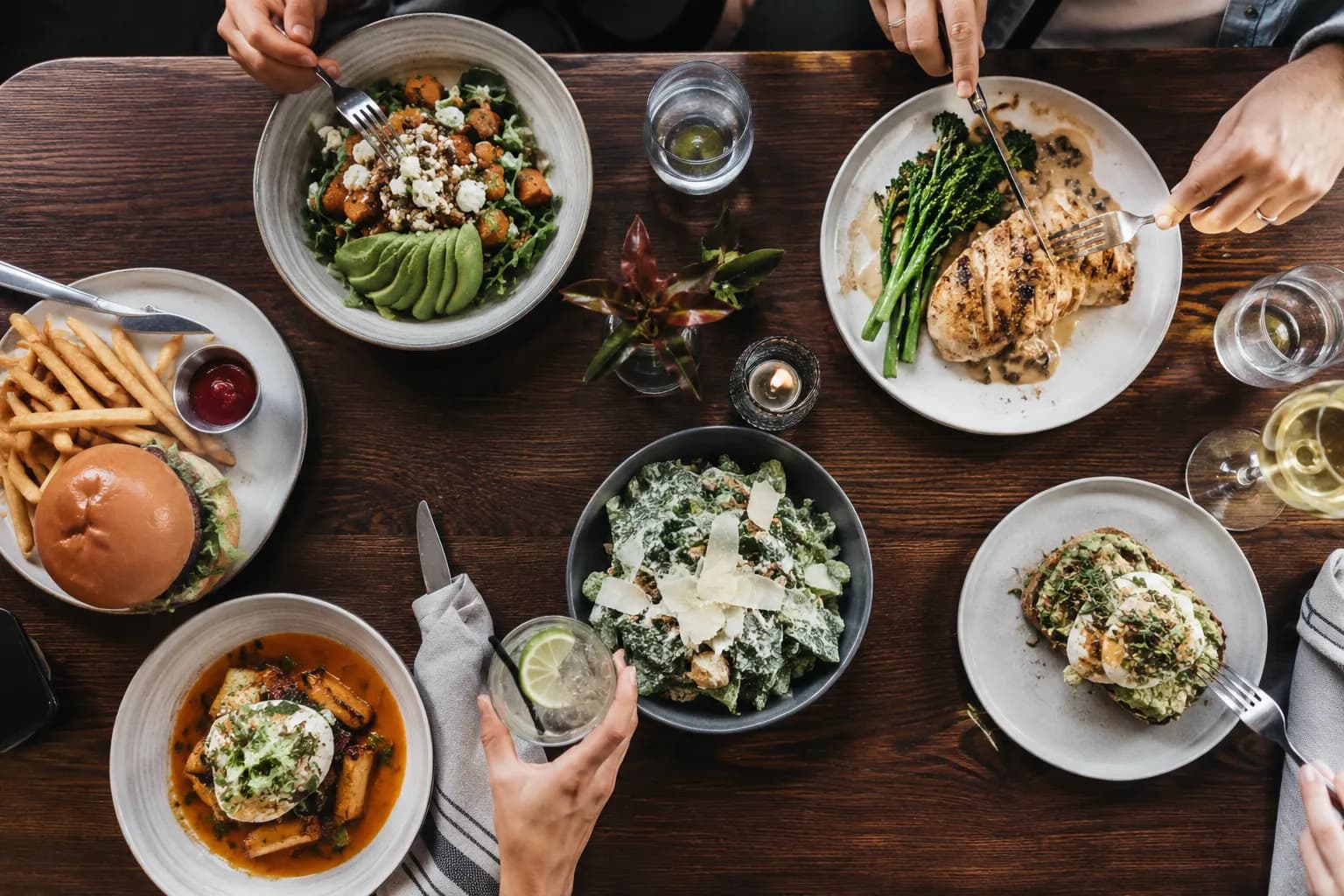
TL;DR. Restaurant eating derails more weight-loss attempts than any other single factor - and it's not because restaurant food is uniquely bad, but because the calorie math is fundamentally harder to manage. Customers underestimate restaurant meal calories by an average of 175-260 calories per meal, reduced-energy restaurant foods in one laboratory analysis averaged 18% more calories than stated, social eating with friends increases meal size by 29-48%, and alcohol adds roughly 82 calories of additional food intake beyond the alcohol's own calories. None of this means you have to stop eating out. It means you need a different toolkit than at-home tracking provides - pre-meal planning, strategic menu reading, deliberate ordering, and reasonable post-meal tracking that accepts you'll never be perfectly accurate. Below: the practical playbook for eating out without derailing weight-loss progress, with the research behind why each strategy works.
People in weight-loss programs consistently rank "eating out" as their single hardest scenario - harder than holidays, harder than vacations, harder than late-night cravings. The reason isn't that restaurant food is uniquely fattening. It's that restaurants make every part of the calorie-tracking process harder: you can't see the preparation, the portion sizes are unknown, social context pulls you toward eating more, and even when calorie counts are posted, they're often wrong.
This article is a practical guide for the realistic reader: someone who's trying to lose weight, who eats at restaurants regularly (because adults do), and who doesn't want to white-knuckle every dinner out or refuse social invitations for the next six months. The approach: take the research on restaurant eating seriously, but treat it as a problem to solve rather than a behavior to avoid.
A note before reading. If restaurant eating triggers anxiety, restrictive thinking, or compensatory behavior (skipping meals before, exercising aggressively to "earn" the meal, etc.), that pattern is worth examining with a registered dietitian or therapist. The strategies below are for someone managing weight casually and sustainably - they're not appropriate as rigid rules for someone with a complicated relationship with food.
Why eating out is genuinely harder
Three things make restaurant eating measurably more difficult than home eating, and understanding them is the first step to managing them.
Restaurants serve more calories than people think
This isn't pessimism - it's data. Multiple studies have shown that restaurant customers systematically and substantially underestimate how many calories they're eating. A 2013 study published in the BMJ surveyed 1,877 adults visiting fast-food chains in New England and collected actual purchase receipts. Adults underestimated their meal calories by an average of 175 calories per meal, with adolescents underestimating by 259 calories on average - and the underestimation grew substantially as meals got larger1. Even when calorie information was posted on the menu, the underestimation persisted.
A separate 2010 study published in the Journal of the American Dietetic Association tested whether stated calorie counts were accurate for commercially prepared reduced-energy foods. Researchers measured 29 quick-serve and sit-down restaurant foods and 10 supermarket prepared meals, finding that the restaurant foods averaged 18% more calories than stated, with some individual restaurant items reaching up to 200% of stated calories. Free side dishes could push provided calories even higher than the entree listing suggested2.
The compounding effect: you underestimate by ~300 calories, the menu itself understates by ~100 calories, and you've got a 400-calorie gap between what you think you ate and what you actually ate. Repeated three or four times a week, that's enough to erase a meaningful calorie deficit entirely.
Cooking methods you can't see add calories you don't expect
A restaurant chicken breast that "should" be 250 calories often arrives at 400+ because of butter in the pan, oil on the grill, finishing fats, and sauces that weren't itemized on the menu. A "side of vegetables" that sounds like 50 calories may have been sauteed in 3 tablespoons of oil and now contains 350.
This is the single most consistent gap between perceived and actual restaurant calories. The food itself isn't the problem; the invisible additions are. Most home cooks who track their food are underestimating their cooking oils too, but the magnitude is much smaller - restaurants tend to use cooking fat liberally because it produces flavor, and the calorie cost is invisible by design.
Social eating measurably changes how much you eat
A 2019 systematic review and meta-analysis published in the American Journal of Clinical Nutrition analyzed studies of food intake across social contexts and found that people consumed 29-48% more food when eating with friends compared to eating alone3. The effect was strongest with familiar companions (friends and family), weaker with strangers and acquaintances.
The mechanism is well-documented: meals with companions last longer (more time at the table = more food eaten), social norms encourage matching the group's eating pace and order size, and the conversational atmosphere reduces conscious attention to satiety signals. None of this is moral failing - it's how human eating has worked for thousands of years.
Restaurant meals nearly always involve other people. The research suggests this is the single biggest reason restaurant meals tend to be larger than home meals, even controlling for the food itself.
Before you go: the highest-leverage strategies
The most powerful strategies for managing a restaurant meal happen before you sit down, when you're still making decisions with a clear head and an empty stomach.
Look up the menu in advance
The single highest-leverage habit, by a wide margin. Most chain restaurants post nutrition information online; many independent restaurants post their menus. Spend 60 seconds scanning the menu before leaving home and decide what you're ordering - before you're tired, hungry, surrounded by tempting smells, and feeling social pressure.
The reason this works isn't willpower; it's decision fatigue. By the time you sit down at a restaurant, you've already made dozens of decisions that day. Adding "and now choose between 40 menu items, half of which are designed to look more appealing than the others" stacks the deck against you. Pre-deciding from your couch, with full information, is dramatically easier than deciding under pressure.
Eat a small, protein-rich snack 30-60 minutes before
Going to a restaurant hungry is the most predictable way to overeat. Hunger reduces the effectiveness of every other strategy on this list. A small snack - a protein bar, Greek yogurt, a piece of cheese with a few crackers, or a hard-boiled egg - takes the edge off enough that you can make deliberate choices instead of impulsive ones.
The snack ideally has 10-15 grams of protein, which has the strongest satiety effect per calorie. The point isn't to eat a full meal beforehand; it's to arrive hungry but not desperate.
Plan your meal totals for the day around the restaurant meal
If dinner is a 900-calorie steak meal, the rest of your day should reflect that. This doesn't mean skipping meals (which often backfires by triggering bigger restaurant orders) - it means making other meals lean and protein-focused. A typical adjustment: keep breakfast and lunch at standard size but heavy on protein and vegetables, skip snacks, and treat the restaurant meal as your higher-calorie meal of the day.
The goal is hitting your daily calorie target, not your every-meal calorie target. Most restaurant meals work fine within a daily calorie budget if you build the day around them - they only become a problem when you treat them as additions to a normal day's eating.
Decide your alcohol policy in advance
This is harder than it sounds because alcohol decisions get worse after the first drink. A 2019 systematic review and meta-analysis published in the British Journal of Nutrition found that alcohol consumption increased subsequent food intake by an average of 343 kilojoules (about 82 calories) above what people would otherwise eat, in addition to the calories of the alcohol itself4. Both the alcohol calories and the resulting food calories tend to be additive to the day's intake - drinkers don't compensate by eating less elsewhere.
Pre-deciding (e.g., "one glass of wine, no second drink, no shared appetizer if I'm drinking") is much more effective than trying to make the decision in the moment.
Reading the menu strategically
Once you're at the restaurant, the menu is the next decision point. A few patterns hold across most cuisines.
What tends to be lower in calories
These categories generally land in the 400-700 calorie range and provide reasonable protein:
- Grilled or roasted lean proteins (chicken breast, fish, lean steak cuts) with vegetables or salad
- Stir-fries and sauteed dishes with lean protein, especially Asian-cuisine dishes labeled "steamed" or "stir-fried" rather than "crispy" or "in sauce"
- Salads with lean protein, dressing on the side (not Cobb salads or salads heavy on cheese, candied nuts, croutons, and dressing - these often exceed 800-1,000 calories)
- Soup-based meals, particularly broth-based rather than cream-based
- Mexican fajitas with grilled protein, vegetables, and selective use of toppings (skip the rice, pick one of cheese OR sour cream)
- Mediterranean-style plates with grilled protein, hummus, vegetables
- Sushi in moderate quantities (2-3 rolls of mostly protein-focused options, not tempura or "crunchy")
- Burgers ordered without the bun or with one half of the bun, with a side salad instead of fries
What tends to be higher in calories than you'd guess
These categories regularly land in the 1,000-1,800+ calorie range:
- Pasta dishes, especially with cream-based sauces, cheese, or large portions
- Anything described as "crispy," "crunchy," "battered," "fried," or "tempura" - these have substantially more calories than non-fried versions of the same dish
- Stuffed entrees (stuffed chicken breast, stuffed shells, stuffed peppers) - the stuffing usually adds 300-500 calories of cheese, breadcrumbs, or fatty meats
- Restaurant Cobb salads - between the bacon, cheese, eggs, avocado, and dressing, these often exceed 1,000 calories
- "Healthy bowls" with multiple toppings - the ingredients are healthy, but bowls with rice + protein + cheese + avocado + sauce + nuts can easily reach 1,200 calories
- Anything described as "smothered," "loaded," or "topped with" - these phrases reliably indicate high-calorie additions
- Sandwiches with multiple cheese types, special sauces, and sides of fries - often 1,200-1,600 calories total
- Steak entrees with two starchy sides (mashed potatoes + bread + butter, etc.) - the steak isn't the problem; the sides are
Decode menu language
Restaurant menu writing is precision marketing. A few terms that reliably indicate higher calorie content:
- "Crispy," "crunchy," "golden": fried
- "Smothered," "loaded," "topped with": additional fat-and-cheese-based ingredients
- "Creamy": dairy fat
- "Glazed," "candied": sugar
- "Hand-breaded," "country-fried": fried with extra coating
- "Buttery": butter (calorically dense)
- "Drizzled," "finished with [oil]": added fats post-cooking
Conversely, lower-calorie indicators:
- "Grilled," "broiled," "roasted," "baked": typically lower-fat preparations
- "Steamed," "poached": very low-fat preparations
- "Marinated": usually flavor-forward without significant added calories
- "Garden," "fresh": vegetable-forward (though watch for calorie-dense salads - see above)
At the table
You've sat down, ordered, and the food has arrived. A few strategies make a real difference here.
Use the "leave 25%" rule
Restaurant portions are typically 1.5-2x the size of an appropriate single-meal portion. A simple, sustainable strategy: eat 75% of what's on your plate and leave the rest. Most restaurants will pack the leftovers, so it's lunch tomorrow rather than wasted food. This single rule, applied consistently, eliminates a meaningful percentage of the over-eating that restaurant meals produce - without requiring any calculations or restraint at the moment of ordering.
The 25%-left rule works partly because it's easier than "stop when you're full." Stopping when full requires accurate satiety perception, which is degraded by group eating, alcohol, and the fact that satiety signals lag behind eating by 15-20 minutes. Stopping at 75% of the plate is a visual cue that doesn't require any internal calibration.
Eat slowly enough that you notice fullness
The 15-20 minute delay between starting to eat and feeling fullness is the reason fast eaters consistently eat more. Practical ways to slow down:
- Put your fork down between bites. Sounds gimmicky, works.
- Talk during the meal. This isn't a problem in social settings; the issue is when conversation produces "talk-while-chewing" rather than "talk-between-bites" patterns.
- Drink water consistently throughout the meal. Not just before - throughout.
- Let other people serve themselves first at family-style meals. Their delay becomes your slowing mechanism.
Order strategically when sharing
Family-style dining and shared appetizers magnify the social-facilitation effect - research suggests groups eat substantially more when food is shared and unrestricted access continues throughout the meal3. A few strategies:
- Order your own entree. Family-style ordering generates more total food per person.
- If sharing appetizers, request them split onto individual plates. Continuous access to a shared platter produces more eating than a defined portion on your own plate.
- Decline the bread basket entirely, or move it to the far side of the table. This is one of the most reliable calorie reductions available; bread baskets pre-meal can easily add 300-500 calories you didn't budget for and won't remember eating.
Order vegetables or salad first
Eating vegetables and protein at the start of a meal triggers earlier satiety than eating them at the end. The effect isn't huge, but it's reliable, and it costs nothing to implement: order a side salad to come with your appetizers, eat your vegetables before you start on your starch, or order a soup or salad as a starter.
Drinks and alcohol
This deserves its own section because the calorie impact of beverages at restaurants is consistently underestimated and often very large.
Calories in liquid form generally don't make you full
Liquid calories are the most metabolically problematic category for weight loss. Solid food triggers stretch receptors in your stomach and produces meaningful satiety; the same calorie count in liquid form produces dramatically less. A 200-calorie soda doesn't make you eat 200 fewer calories at dinner - it just adds 200 calories on top.
Beyond restaurant water, the most useful drink choices: unsweetened iced tea, sparkling water, black coffee, or diet sodas if you tolerate them. These have negligible or zero calories and don't undermine your meal calories.
Alcohol math is unforgiving
A few reference points:
- A pint of beer: 200-250 calories (more for craft IPAs, often 300+)
- A 5-ounce glass of wine: 120-150 calories
- A standard cocktail: 200-400 calories (margaritas often 400-600+; mojitos and old-fashioneds 200-250; Manhattans and martinis 175-200)
- A frozen blended drink: often 500-700 calories
Two drinks at dinner is often 500+ calories before the food arrives. Combined with the +82-calorie food intake increase that alcohol consistently produces4, the effective calorie cost of "a couple of drinks with dinner" is typically 600+ calories beyond what most people register.
The lower-calorie alcohol options for restaurant settings: dry wines (red or white at 5oz), light beer (~100 calories per 12oz), spirits with soda water and lime (~100 calories per drink), or simple low-sugar cocktails. The high-calorie options to be aware of: cocktails with juice, sweetened mixers, or syrups; craft beers; frozen blended drinks; and dessert wines.
Practical drink strategy
Pick one in advance:
- Dry pattern: No alcohol at this meal. Saves 200-500+ calories.
- One-drink pattern: A single drink with the meal. Adds ~150-200 calories from the drink, plus ~80 calories of additional food intake. Manageable budget for most.
- Special-occasion pattern: Drink as part of the meal experience. Pre-budget the day for it and accept that this dinner is a higher-calorie day.
The pattern that consistently produces problems is "I'll see how I feel" - because how you feel after the first drink is rarely "I should stop now."
Tracking restaurant meals (when you don't know exact calories)
You will never be perfectly accurate tracking restaurant meals. The 2013 BMJ study cited above showed that customers - including those whose meals were on display in front of them - underestimated calorie content by 175-260+ calories per meal1, and the 2010 Tufts analysis showed that even the calorie counts the restaurants themselves publish can be off by 100+ calories per dish2. The goal isn't perfect accuracy - it's reasonable estimation that captures the rough magnitude of what you ate.
A practical approach:
For chain restaurants: Use the published nutrition information (most chains post it on their websites). Round up by 10-20% to account for the documented gap between stated and actual calorie content2. A 600-calorie listed meal is probably 650-720 calories in practice.
For independent restaurants: Use a tracking app's restaurant database - most have entries for common dishes (pasta carbonara, chicken parmesan, Caesar salad with chicken). Estimate portion size honestly, then add 100-200 calories to account for cooking-fat additions you can't see. In Mindful, this is the kind of meal where it can be useful to log the dish as components instead of hunting for a perfect match: protein, starch, sauce, cooking fat, and any sides.
For unfamiliar dishes: Estimate the components separately. A typical restaurant pasta entree is ~3 cups of pasta + 1 cup of sauce + 4 oz of protein. That's about 600 calories of pasta + 100-200 calories of sauce + 200-300 calories of protein and added fat = roughly 900-1,100 calories total. Even a rough estimate captures the right order of magnitude.
Photograph the plate before eating. A picture of what you actually got served (not just the menu description) will be much more useful for honest portion estimation later than memory will be. If you use Mindful, the photo can act as your reminder when you log later, especially for the parts that are easiest to forget: bread, shared appetizers, sauce, drinks, and how much of the plate you left behind.
The mindset that matters: a rough estimate is dramatically better than no estimate. People who skip tracking entirely on restaurant days often discover their week-long "deficit" was actually maintenance because of three under-tracked dinners. A rough number, even if it's off by 200 calories, keeps you in the realistic range.
When you've already eaten the meal
A specific scenario worth addressing: you went out, ate more than you planned, and now feel like you've "ruined" the day. The honest research-backed reframe:
A single restaurant meal does not undo weight-loss progress. Even if you ate 1,500 calories at a single meal - substantially above your target - that's at most a few hundred calories above your maintenance level for the day, not your weekly deficit eliminated entirely. One large meal is a few days of slowed progress, not a reset.
Compensatory restriction the next day usually backfires. The pattern of "I overate at dinner, so I'll eat 800 calories tomorrow to make up for it" sets up a cycle of restriction, hunger, larger overeating, guilt, and more restriction. Classic restraint research connects rigid dieting with greater vulnerability to disinhibited overeating, which is why the safer practical move is usually returning to your normal calorie target the next day rather than trying to punish the meal away5.
The actually useful response to a meal you didn't track precisely:
- Log a reasonable estimate, even if it's rough. The act of logging keeps your week's data meaningful.
- Return to your normal calorie target the next day - not a smaller one, not a larger one, the same one.
- Track your weight as a 7-day rolling average, not as a daily check. You'll see the actual trend rather than the post-restaurant-meal water-and-sodium spike.
- Don't add extra exercise to "burn off" the meal. Exercise calorie burn is consistently overstated, and treating exercise as punishment for eating tends to produce worse long-term relationships with both.
This is another place where Mindful can be useful if you are already tracking: log the meal once, add a short note like "restaurant dinner, salty meal, estimate," and move on. That keeps the data useful without letting one meal become the emotional center of the week.
The best restaurant-meal recovery is the next-meal recovery: a normal, moderate, protein-forward meal. Not skipping breakfast. Not a 90-minute workout. Just a normal next meal.
Frequently asked questions
What's the best thing to order at a restaurant for weight loss?
Generally: a grilled or broiled lean protein (chicken breast, fish, lean steak) with vegetables and a small starch or salad. Most restaurant menus have at least one option that fits this template. The simplest mental rule: pick a protein, pick vegetables, pick one of starch/cheese/fried side, and stop there. Most "diet" menu sections work fine; you don't need to seek out specifically marked items.
How can I track restaurant meals if I don't know the exact calories?
You can't track them perfectly - the research is clear that customers reliably underestimate restaurant calorie content by hundreds of calories per meal1, and even posted menu calorie counts can be off2. Aim for a reasonable estimate: use chain-restaurant published nutrition info (rounded up 10-20%), use your tracking app's restaurant database for common dishes, or estimate components separately for unfamiliar items. In Mindful, a practical approach is to log the entree, add obvious extras separately, and leave yourself a short note if the meal was unusually oily, salty, or hard to estimate. A rough estimate dramatically beats no estimate. The restaurant-tracking approach is in the section above.
What about all-you-can-eat or buffet meals?
These are the most challenging. Strategies that help: order a starter salad before approaching the buffet (so you arrive less hungry), use a smaller plate, fill half your plate with vegetables and lean protein before adding starches, and limit yourself to one serving rather than the unlimited refills the format encourages. For tracking purposes, estimate generously upward - buffet meals are often 1,200-1,800 calories, sometimes higher.
How do I handle business dinners or social events?
The pre-meal planning strategies in this article apply doubly here. Look up the menu in advance, eat a small protein snack 30-60 minutes before, decide your alcohol pattern in advance, and treat it as your higher-calorie meal of the day. The social-facilitation research suggests you'll eat 30-50% more in these contexts3 - knowing this in advance helps you compensate without feeling deprived.
Should I order off the "lite" or "low-calorie" menu sections?
Sometimes - but with some skepticism. The 2010 Tufts study found that "low-calorie" menu items at chain restaurants were more likely than other items to contain more calories than stated2. The "low-calorie" framing also tends to come with smaller portions and less satisfaction, which can drive larger total intake elsewhere. Better strategy: order what you'd actually enjoy from the regular menu, and use portion control rather than relying on menu-section labels.
Is it okay to drink alcohol at restaurants when trying to lose weight?
Yes, with a planned approach. Alcohol has direct calorie costs (150-400+ per drink) and indirect food-intake costs (~80 additional calories per drinking occasion4). For most people, occasional drinking with restaurant meals is compatible with weight loss as long as it's planned in advance and budgeted into your daily calories. The pattern that creates problems is undecided drinking - "I might have a drink, we'll see" - which reliably becomes more drinks than intended.
Should I work out before or after a restaurant meal?
Neither, particularly. Exercise calorie burn is consistently overstated (your watch is probably off by 20-50%), and treating exercise as compensation for eating produces a poor long-term relationship with both. Continue your normal exercise routine independent of restaurant meals. The exception: if you'd already planned a workout that day, going to dinner doesn't change that - but don't add extra cardio specifically to "burn off" the meal.
How often can I eat out and still lose weight?
There's no universal answer, but the practical guideline: as often as you can manage to track reasonably and stay within your weekly calorie average. For most people, that's 2-4 restaurant meals per week with the strategies in this article applied. People eating out 5+ times per week typically find weight loss substantially harder, primarily because the cumulative tracking error compounds.
What if I'm cooking at home is also high calorie?
If your home meals are running consistently high, the highest-leverage fix is usually accurate measurement of cooking oils, butters, and dressings - these are where home meals most often hide calories. For more on this, see our article on why you might not be losing weight in a calorie deficit.
Where Mindful can help
Restaurant meals are one of the places where a food journal can be most useful, not because the estimate will be perfect, but because a rough record is usually better than letting the meal disappear from the week entirely. If you take a quick photo before eating, log the main components later, and round up for cooking oils or sauces, you can keep the day's picture honest without turning dinner into math homework at the table.
Mindful can help with that quieter version of tracking in a few practical ways:
- Log the meal from a photo after dinner instead of interrupting the table conversation.
- Break a restaurant meal into components when there is no exact menu match, like grilled salmon, rice, vegetables, sauce, and cooking oil.
- Add forgotten extras separately, especially bread, shared appetizers, alcohol, dessert bites, and sauces.
- Save meals you order often so the next version takes seconds instead of starting from scratch.
- Use notes for context, like "business dinner," "estimated portions," or "left about 25%."
- Watch the weekly calorie and weight trend instead of overreacting to the next morning's sodium bump.
That last point matters most. The goal is not perfect restaurant calorie accounting. It is enough awareness to enjoy meals out and still understand the trend over time.
References
Footnotes
-
Block JP, Condon SK, Kleinman K, Mullen J, Linakis S, Rifas-Shiman S, Gillman MW. "Consumers' estimation of calorie content at fast food restaurants: cross sectional observational study." BMJ 346:f2907. May 2013. DOI ↩ ↩2 ↩3
-
Urban LE, Dallal GE, Robinson LM, Ausman LM, Saltzman E, Roberts SB. "The accuracy of stated energy contents of reduced-energy, commercially prepared foods." Journal of the American Dietetic Association 110(1):116-123. January 2010. DOI ↩ ↩2 ↩3 ↩4 ↩5
-
Ruddock HK, Brunstrom JM, Vartanian LR, Higgs S. "A systematic review and meta-analysis of the social facilitation of eating." American Journal of Clinical Nutrition 110(4):842-861. October 2019. DOI ↩ ↩2 ↩3
-
Kwok A, Dordevic AL, Paton G, Page MJ, Truby H. "Effect of alcohol consumption on food energy intake: a systematic review and meta-analysis." British Journal of Nutrition 121(5):481-495. March 2019. DOI ↩ ↩2 ↩3
-
Polivy J, Herman CP. "Dieting and binging: A causal analysis." American Psychologist 40(2):193-201. February 1985. (Foundational research showing restrictive dieting after perceived overeating predicts subsequent disinhibited eating, not improved compliance.) DOI ↩